

Lines by Product Type
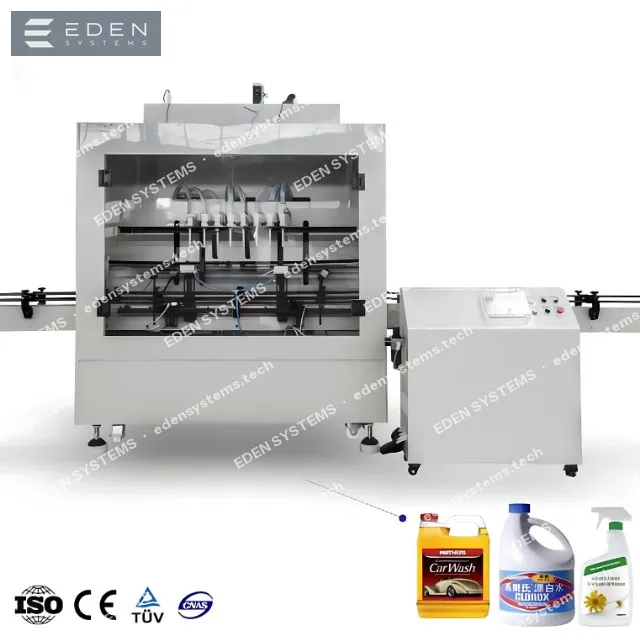
Aggressive Liquid Filling: Materials, Dosing, and Safety
Acids, alkalis, hypochlorite, and solvents can destroy a standard line within months. Selecting the correct wetted-part materials is more important here than production capacity.
Where the Project Begins
The first document is the product safety data sheet. It provides the concentration, hazard class, compatible materials, and ventilation requirements. Only then can the filler be selected.
The second factor is the liquid's behavior: viscosity, foaming tendency, volatility, and crystallization during cooling. Each of these characteristics changes the required dosing system.
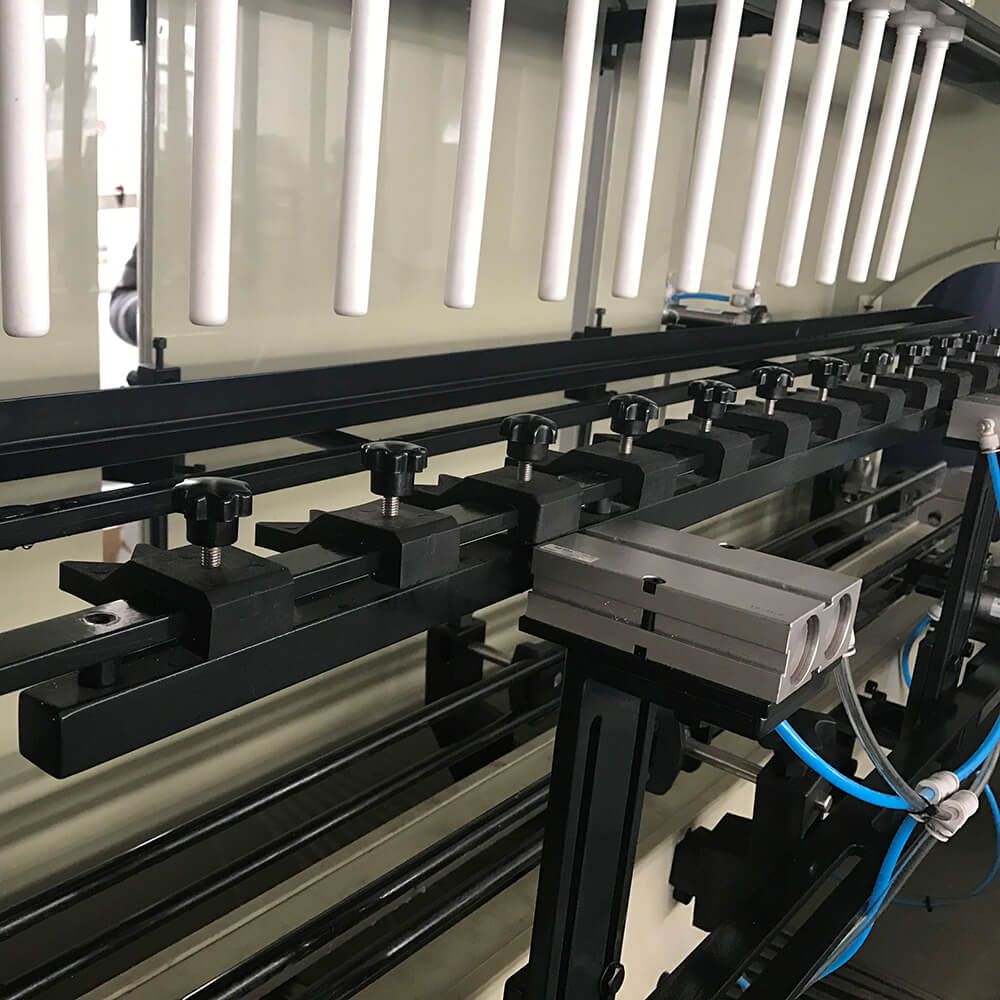
The third factor is the container. Bottles, jerry cans, and drums require different nozzle lift heights and different methods of securing them on the conveyor.
Wetted-Part Materials
| Medium | Contact Material | Comments |
|---|---|---|
| Sodium hypochlorite | PVDF, PP, PTFE | Stainless steel is not suitable |
| Mineral acids | PVDF, PTFE, glass | The area must include spill-containment trays |
| Alkalis | PP, AISI 316L stainless steel | EPDM seals must be monitored |
| Solvents | 316L stainless steel, PTFE | Explosion-proof design |
| Surfactants and cleaning formulations | AISI 304/316L | Foam control is the primary challenge |
Dosing Types
- Piston Doser
- High volumetric accuracy; suitable for viscous and thick formulations.
- Mass Flow Meter
- Doses by mass and is unaffected by temperature or density. Optimal for expensive products.
- Level Filling
- Simple and inexpensive, producing a uniform visual level in transparent containers.
- Weigh Filling Station
- For jerry cans starting at 10 liters and for drums, with top-off compensation.
FAQ
Can one line be used for different chemical groups?
Only when the materials are compatible and the system is completely flushed between products. Acids and hypochlorite are not filled on the same equipment without dedicated circuits.
How is dosing accuracy monitored?
Through check weighing according to established procedures and, for stringent requirements, an inline checkweigher that rejects nonconforming containers.
Is induction sealing required?
Yes, for volatile and hazardous formulations. It ensures transport seal integrity and provides tamper evidence.
Read next
Ready solutions
Equipment catalog
Project services
Related projects
Calculation on the topic
We will calculate your line
Describe the product, packaging formats and planned volume — we will prepare a line scheme, specification and preliminary budget estimate with payback.
- Line scheme and unit specification for your product
- Budget range and payback period
- Site requirements: power, water, personnel