

Lines by Product Type
Antifreeze and Windshield Washer Fluid Filling Line
Automotive chemicals are seasonal products with sharp demand peaks. The line is designed to produce the annual volume within a short season and switch to other products during the off-season.
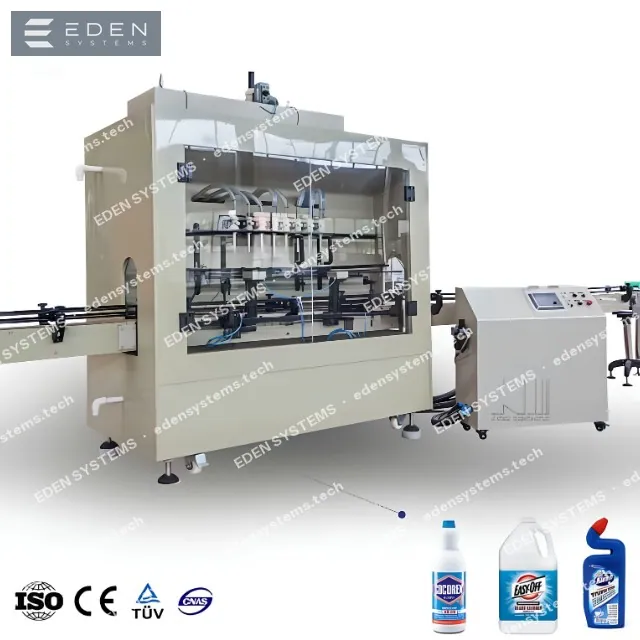
Product Characteristics
Glycol- and alcohol-based formulations flow readily, foam during high-speed filling, and are aggressive toward standard seals. This creates three requirements: bottom-up filling with a rising nozzle, chemically resistant seal materials, and enclosed exhaust ventilation above the filling area.
Windshield washer fluid also requires formulation control: the recipe is prepared in an agitated blending tank, while density and freezing point are checked before each batch.
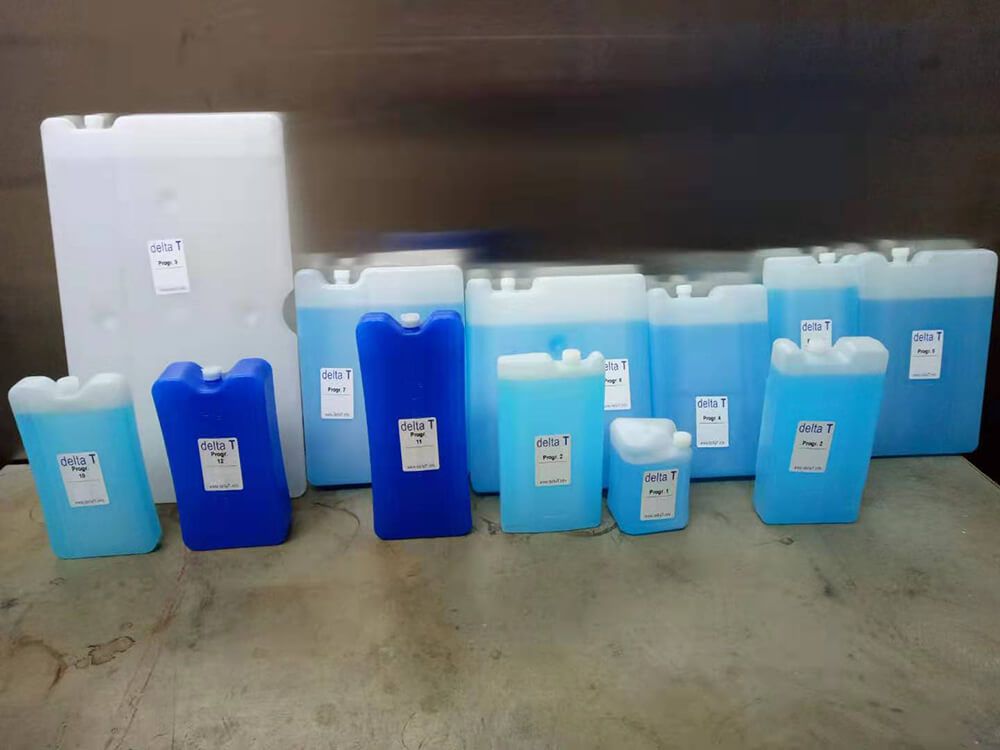
Seasonality determines the layout: the line must allow quick changeovers between 1-, 3-, and 5-liter jerry cans and operate for two or three shifts during peak demand.
Key Components
- Agitated Blending Tank
- Mixing concentrate, water, and colorant with density control.
- Inline Filler with Bottom-Up Filling
- The nozzle descends to the bottom and rises as the container fills, eliminating foaming.
- Capping Unit
- Screw cap with torque control and optional induction sealing.
- Labeler
- Applies pressure-sensitive labels to both sides of the jerry can.
- Multipack Packaging
- Shrink wrapping or case packing, followed by palletizing.
Typical Production Capacity
| Format | Production Capacity | Filler Type |
|---|---|---|
| 1 L | 2000-4000 units/hour | Inline multihead |
| 3-5 L | 1200-2500 units/hour | Inline with bottom-up filling |
| 10-20 L | 300-700 units/hour | Weight-based filler |
| 200 L drum | 40-80 units/hour | Weigh filling station with manipulator |
FAQ
Can household chemicals be filled on this line?
Yes, these products have similar requirements. Interchangeable format parts for the bottles and a separate cleaning circuit will be required to prevent cross-contamination.
Is an in-house blow molding machine needed for proprietary jerry cans?
At annual volumes of several million units or more, in-house blowing pays for itself within one or two seasons. At lower volumes, purchasing finished containers is more economical.
How should seasonal capacity be calculated?
Use the peak monthly shipment volume and divide it by the actual available operating time, including changeovers. We usually include a 15-20 percent capacity margin for container supply disruptions.
Read next
Ready solutions
Equipment catalog
Project services
Related projects
Calculation on the topic
We will calculate your line
Describe the product, packaging formats and planned volume — we will prepare a line scheme, specification and preliminary budget estimate with payback.
- Line scheme and unit specification for your product
- Budget range and payback period
- Site requirements: power, water, personnel