

Cosmetics Filling Line
Cosmetics and pharmaceuticals: precise piston dosing of small volumes, handling bottles, jars, tubes and dispensers, a clean zone and full batch traceability.
- Product
- Creams, lotions, gels, serums, shampoos, ointments
- Viscosity
- up to 100,000 cP
- Container
- Bottle, jar, tube, airless, 5 ml – 1 L
- Output
- 800–6,000 units/h
- Dosing
- Servo-piston, ±0.5 %
- Capping
- Pumps, dispensers, flip-top, screw caps
- Tube sealing
- Hot air, trimming and batch embossing
- Materials
- AISI 316L, pharmaceutical-grade seals
Line parameters
About the solution
Cosmetic products are expensive and dose volumes are small, so priority goes to accuracy and zero waste. A servo-piston doser with an anti-drip valve holds deviation within ±0.5 % even at doses of 5–30 ml.
The line is built modularly: filling machine, pump and flip-top capping, tube filler with hot sealing, labeler and coder. For pharmaceutical products, a clean zone and validatable washing are added.
Built into the design
Precise small doses
The servo-piston meters from 5 ml with repeatability unattainable by gravity filling.
No product loss
Anti-drip valve and vacuum suck-back: costly formulations don't remain on the neck or soil the label.
Tube handling
Orienting the tube by its mark, filling, hot seam sealing, trimming and batch-number embossing.
Clean zone
Laminar flow over the filling zone, designed to GMP requirements for pharmaceutical products.
Line composition along the product flow
8 positions along the product flow. Every unit opens in the catalog: series, specifications, scope of supply and a quote request.
- 1
1. Container feeding
Bottle unscrambler or manual loading onto a conveyor with ionized-air blow-off.
Cosmetics and pharmaceutical filling →
- 2
2. Product preparation
Homogenizer-reactor, vacuum deaeration and delivery to an agitated hopper.
Cosmetics and pharmaceutical filling →
- 3
3. Piston filling
Servo-piston doser with dip tube and anti-drip valve.
Cosmetics and pharmaceutical filling →
- 4
4. Tube filler (alternative)
Tube filling, hot seam sealing, trimming and batch embossing.
Cosmetics and pharmaceutical filling →
- 5
5. Pump and dispenser capping
Feeding, orienting and screwing of the pump or flip-top with torque control.
Capping equipment →
- 6
6. Checkweighing
Weighing every unit with feedback to the doser and rejection.
Marking and quality inspection →
- 7
7. Labeling and date coding
Pressure-sensitive label on round and shaped containers, date and batch code.
Labelling equipment →
- 8
8. Carton and case packing
Cartoning machine, case packing, sealing and palletizing.
Packing and palletising →
Line model selection
Selecting a doser by product viscosity
Creams and thick emulsions require a piston doser; liquid products use diaphragm or gravity filling.
| Product type | Dosing method | Dose range | Output |
|---|---|---|---|
| Cream, lotion, mask | piston, with heated tank | 10–500 mL | 1,500–3,000 pcs/h |
| Shampoo, shower gel | diaphragm pump | 50 mL – 1 L | 2,000–4,000 pcs/h |
| Foundation, serum | piston with precise dose | 5–100 mL | 1,200–2,500 pcs/h |
| Liquid soap, antiseptic | gravity or diaphragm | 50 mL – 1 L | 2,500–5,000 pcs/h |
Dose accuracy for small containers (up to 50 mL) is ±1%, achieved through a precision piston pump and servo drive.
Container and packaging
| Container material | Shape | Volume | Capping method |
|---|---|---|---|
| PET / PP / glass | round, oval jar | 10–500 mL | screw cap, dispenser |
| Pump bottle | round, square | 50 mL – 1 L | pump doser, spray trigger |
| Tube | cylindrical, laminate | 30–200 mL | seal or flip-top cap |
Format parts are designed for fast changeover between multiple SKUs within a single shift.
Operating conditions
| Parameter | Value |
|---|---|
| Product-contact materials | AISI 316L, silicone gaskets |
| Product tank heating | up to 60 °C for viscous emulsions |
| Room temperature | 18–28 °C |
| Power supply | 380 V, 3-phase, 50 Hz |
Line process flow
The cosmetics filling line is assembled around the specific product: creams and emulsions require a piston doser with a heated tank, liquid products need a diaphragm pump at high speed. The common part of the line is precise dosing of small volumes, capping with a pump or dispenser, and careful packing of small containers.
Key line features
- Piston doser with heated product tank — viscous emulsion does not set in the piping
- Dose accuracy for small containers (10–50 mL) of ±1% or better via a precision pump and servo drive
- Dip nozzle with vacuum suck-back — no drips on the neck after filling
- Quick-change format parts: neck grippers and starwheels for jars, tubes, and bottles
- Product-contact parts in polished AISI 316L stainless steel with no stagnant zones
- Compatible with any capping method: screw cap, pump, spray trigger, flip-top
- Fill volume and cap seating quality inspection under backlight before the labeler
Layout for creams, masks, and lotions of higher viscosity in a jar with a screw cap.
- 1Empty jar feeding (unscrambler)
- 2Container purge before filling
- 3Piston doser with product heating
- 4Cap fitting and screwing
- 5Fill level inspector
- 6Labeling machine
- 7Date coding and batch marking
- 8Case packing with dividers
Key line stations
What sits behind the nameplate output: contact-part execution, operating logic and service points for every station.
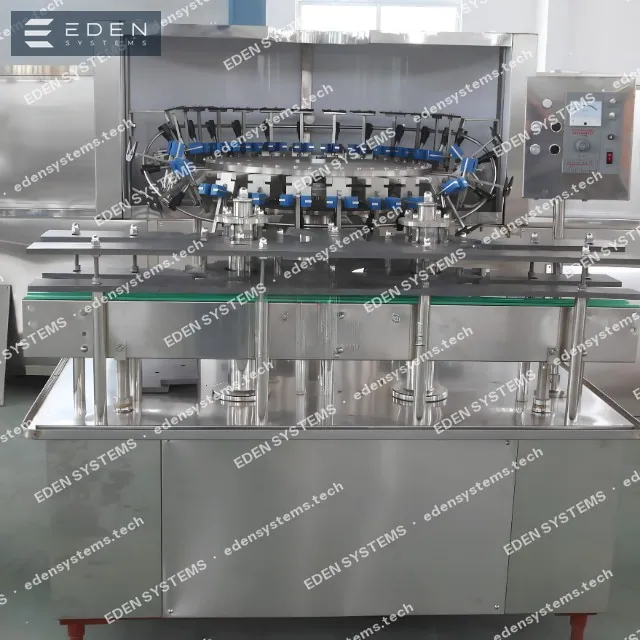
Rinsing heads
Container preparation
- AISI 304/316 stainless nozzles and manifold with fan-jet spray: lower water consumption and more even rinsing over the entire inner surface.
- Neck-grip gripper with a polymer insert holds the bottle by the finish, minimizing the risk of preform crushing or scratching.
- Rinsing pump and piping in sanitary design, the circuit disassembles without tools.
- Rinse-water recirculation with filtration — up to 30% savings compared to drain discharge.
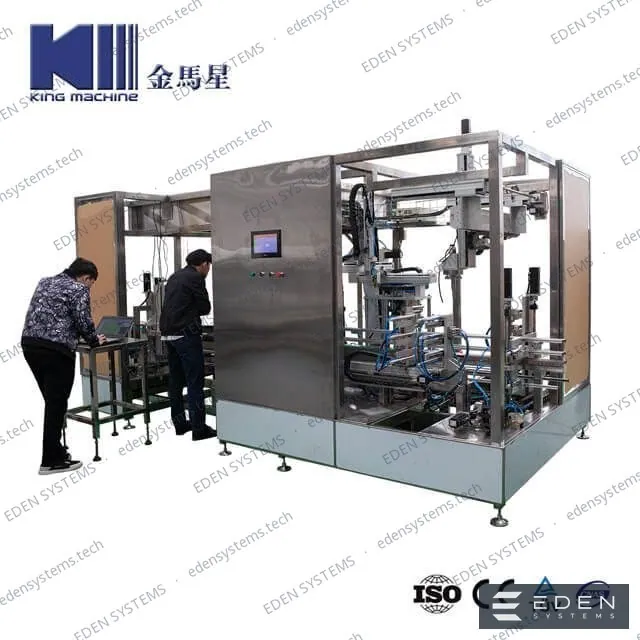
Core machines of the line
Equipment of the “Cosmetics Filling Line” layout: each tile opens the catalog with series, specifications and a quote request for that machine.
Bottle feeding and orientation
The unscrambler places bottles or jars on the conveyor in the correct orientation; a counter synchronizes feed rate with the doser.
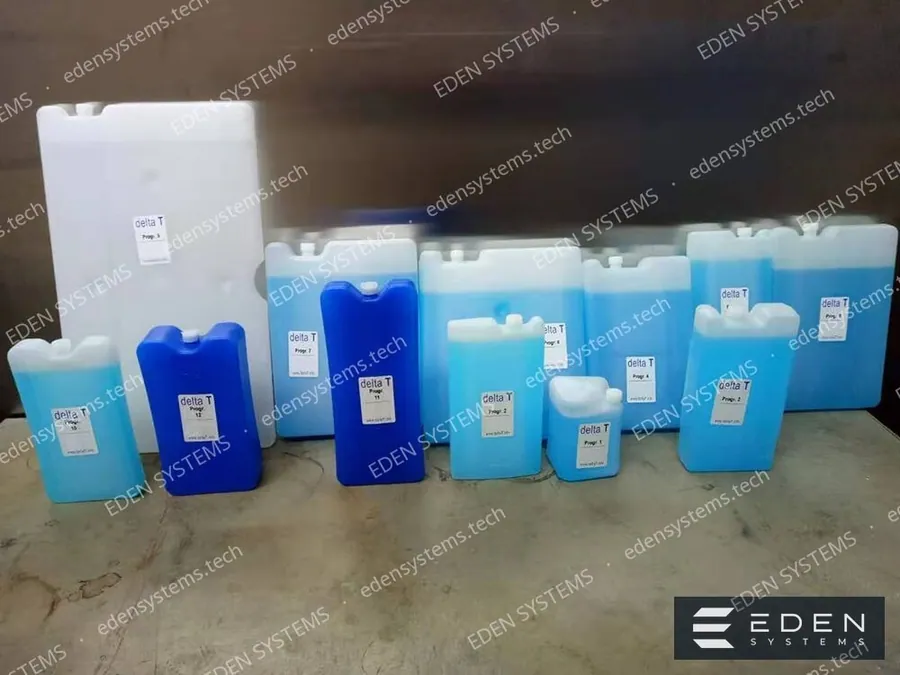
Piston doser for creams and lotions
Contact volumetric piston dosing with a heated product tank and dip nozzle — no foaming on high-viscosity emulsions.
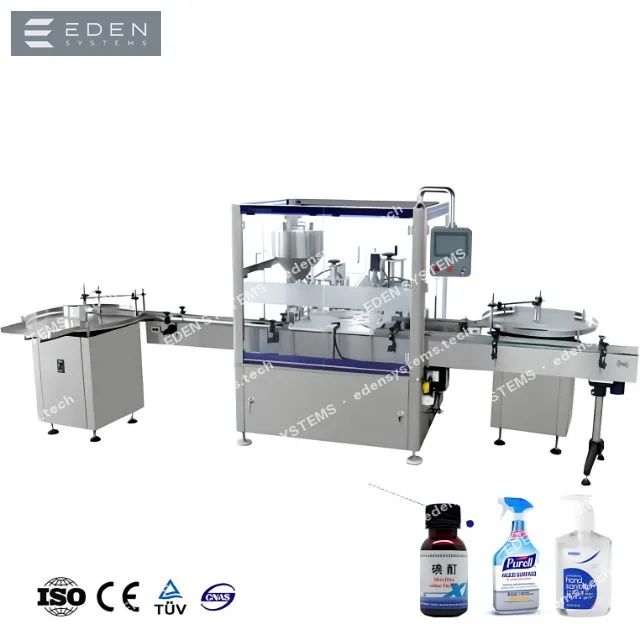
Filling block for liquid products
Diaphragm or piston pump for shampoo, shower gel, and liquid soap with fill-speed segmentation by viscosity.
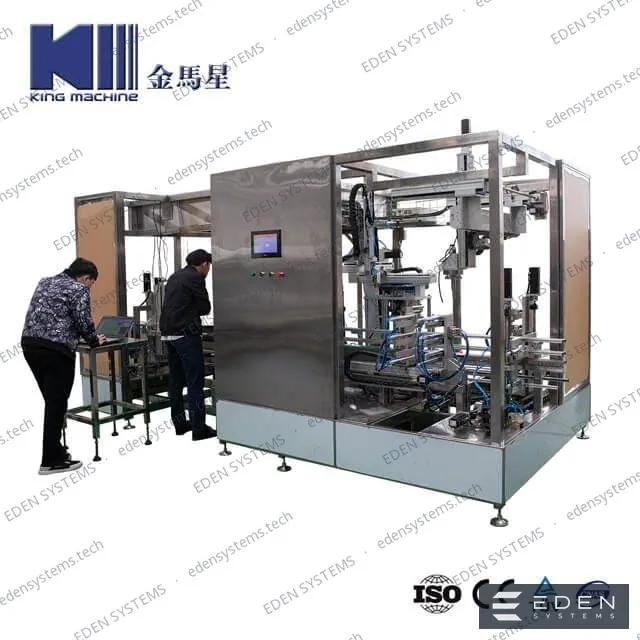
Quick-change format parts
Neck grippers, starwheels, and guide rails change without tools — switching between jar, tube, and bottle takes minutes.
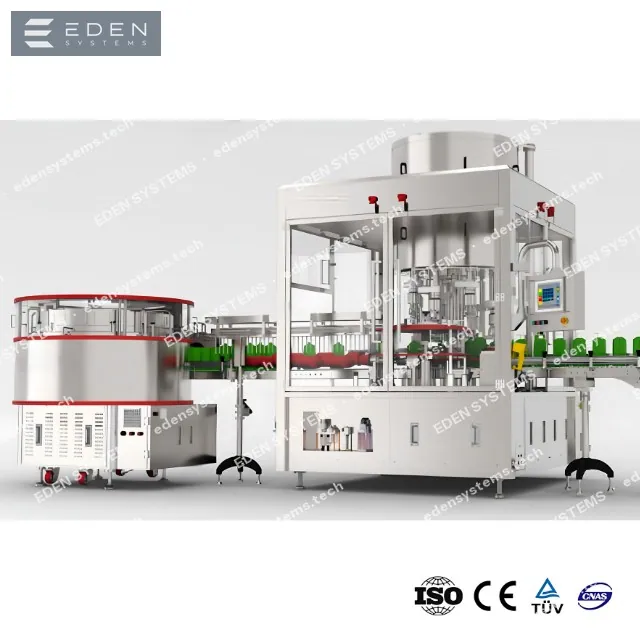
Capping machine with pump doser
Fitting and crimping a pump, dispenser, or flip-top cap with seating force monitoring on the neck.
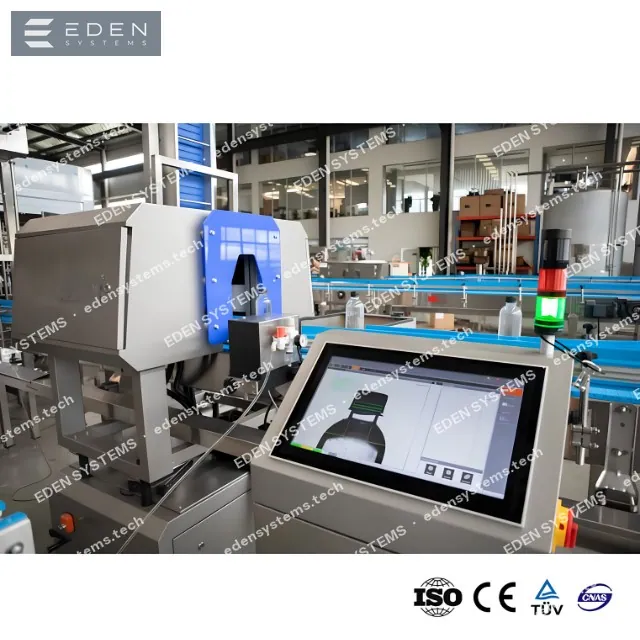
Fill level and appearance inspector
Backlight inspection of the container: fill volume, foreign inclusions, and cap seating quality.
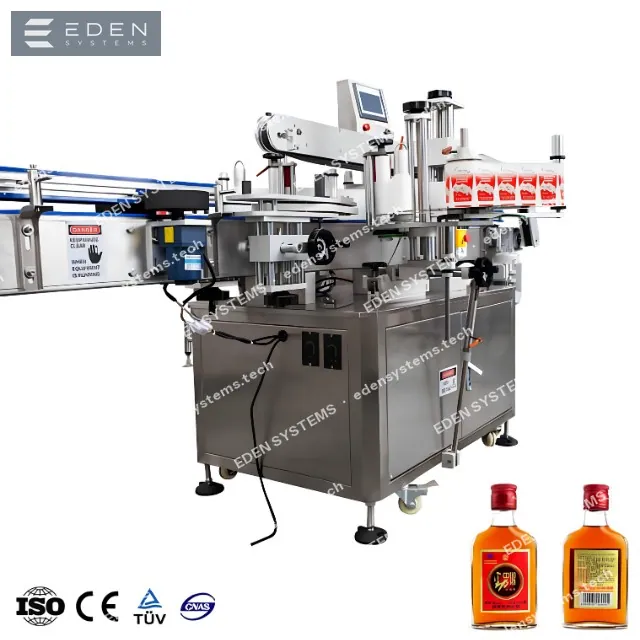
Labeling machine
Self-adhesive label on round or flat containers, with a back label on jars and tubes if required.
Date coder and batch marking
Printing batch number, manufacturing date, and shelf life on the bottom or shoulder of the bottle.
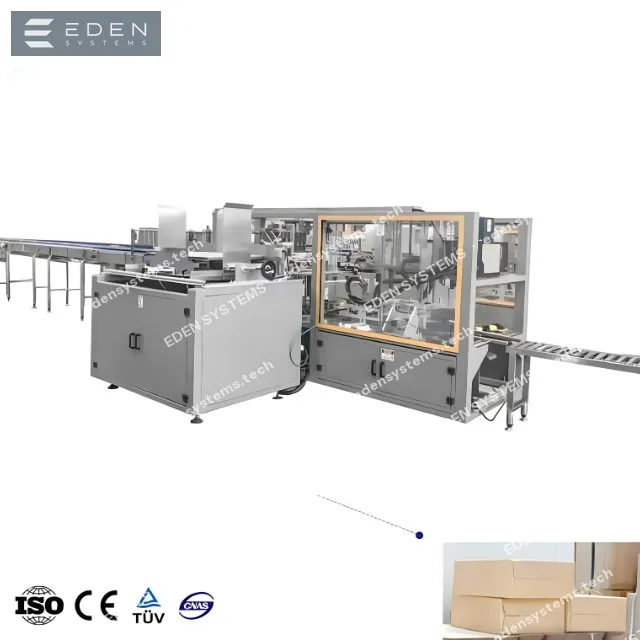
Case packing and palletizing
Placement into corrugated cases with cardboard dividers for small containers, sealing, and pallet formation.
Which closure do you use
The cap type defines the capping block: heads, feeding and orientation of the closure, torque or press-on force. State your option in the request and we will select the head and sorter for it.
24/410, 28/410
Dispensing pump / trigger sprayer
The dip tube is cut to the bottle height, the head screws it on without the tube twisting inside the container.
Capping unit: Capping head with oriented pump feed
24 mm, 28 mm
Flip-top / disc-top cap
The closed cap is fed pre-oriented to the label so the flap faces the right direction after capping.
Capping unit: Press head + tightening
PCO 1881 / 28 mm / 38 mm
Plastic screw cap
The tamper-evident band tears on opening. Torque is set on the HMI and monitored on every chuck.
Capping unit: Magnetic screwing head
Auxiliary systems of the line
The engineering utilities without which a line never reaches its rated output: water and product preparation, sanitation, container handling.
Water treatment
Purified water for cosmetic formulations.
- The scheme is built from a feed-water analysis: mechanical filtration, carbon, softening, reverse osmosis
- Station output sized with a 20% margin over peak line consumption and wash cycles
- Membranes with automatic flushing and VFD-driven pumps — no water hammer
- UV and ozone disinfection, AISI 316 buffer tank with a breather filter
Reactor area
Preparing cream, emulsion or gel.
- Vacuum homogenizer with a heating/cooling jacket
- Mass-based oil-phase and water-phase dosing, version-controlled recipes
- Emulsion deaeration — a bubble-free product with a uniform texture
- AISI 316L buffer vessels with sanitary fittings
Filling viscous products
Tubes, jars and bottles.
- Piston dosing at ±0.5% accuracy with a lifting nozzle
- Heated path for thick creams and wax-based formulas
- Quick-change contact parts for frequent SKU changeover
- Small batches from a few hundred units without product loss
Capping and tube sealing
Finishing the cosmetic package.
- Tube orientation by mark and hot tail sealing with batch embossing
- Pump, dispenser or flip-top fitting with torque control
- Induction membrane for first-opening protection
- Cap presence and seating inspection with rejection
CIP station (clean-in-place)
Wash of the emulsion path after every formulation.
- Alkali, acid and hot-water tanks holding temperature within ±2 °C
- Recipe-driven wash programs: phase time, concentration and flow are logged
- Flow meter on the supply line — actual flow is verified, not assumed from the nameplate
- Filtered detergent return to the tanks; discharge only once the solution is spent
Coding and inspection
Batch, date and PAO marking on the pack.
- Inkjet or laser coder: date, shift, batch number, traceability code
- Fill-level, cap presence and seating inspection with automatic reject to a pocket
- Good/reject product counters logged per shift hour
- Ready for mandatory marking: case and pallet aggregation at the line outfeed
Packing and palletizing
Individual carton, case and pallet.
- Shrink film pack or corrugated case, format tailored to the retailer's requirements
- Layer palletizer to a defined pattern, robotic version for constrained floor space
- Pallet wrapper with pre-stretch film: lower film consumption, pallet withstands transport
- SSCC pallet label printing and application, data handoff to the ERP system
FAQ
How accurate will a 30 ml cream fill be?
The servo-piston doser gives a deviation within ±0.5 % of the dose, i.e. about ±0.15 ml on 30 ml. A checkweigher keeps this value stable throughout the shift.
Is the line suitable for pharmaceuticals?
Yes, in a version with a clean zone, validatable washing and documented batch traceability.
How much does the Cosmetics Filling Line cost?
Price on request: the budget depends on output, container type, line composition and the level of automation. After a short brief we send a preliminary estimate within 1–2 working days and a full quotation broken down by machine within 3–5 days.
What are the delivery and commissioning lead times?
Standard machines ship 8–12 weeks after the specification is confirmed, complete lines 12–20 weeks. Transport takes 2–6 weeks depending on the route; installation and commissioning on site take 2–4 weeks, with operator training included.
What output does this line reach?
The working range is 800–6,000 units/h. Exact output is confirmed against your container, product and shift plan: we calculate the line balance and keep a margin on the bottleneck machine.
Request a quote: Cosmetics Filling Line
Tell us the product, the container and the target output — we will return the line composition, a layout, a budget range and a delivery schedule.
Related solutions
Lines with a similar equipment set — useful when you plan several products on one site.
1,000–12,000 units/h
Household Chemicals Filling Line
Filling of detergents and surfactants into bottles and jerrycans, trigger and pump capping.
Open solution1,000–20,000 bph
Vegetable Oil Filling Line
Weight or volumetric oil filling into PET, glass and tinplate with capping, induction sealing, labelling and case packing.
Open solution2,000–36,000 bph
Drinking Water Filling Line, 0.33–1 L
Rinser-filler-capper monobloc for PET, water treatment, labelling and shrink packing.
Open solutionServices for this line
Engineering, logistics, installation and service that turn this line into a working production site.
Digital layer
Any line can be supplied with a digital layer
SCADA, MES, OEE monitoring, batch traceability and integration with plant systems — engineered together with the line, not bolted on later.