

Household Chemicals Filling Line
Filling of detergents, gels, sanitizers, bleaches and technical fluids: flowmeter, weight or piston filling, capping with triggers, pumps and screw caps.
- Product
- Detergents, gels, sanitizers, hypochlorite, bleaches, shampoos
- Viscosity
- 1–20,000 cP
- Container
- PET, HDPE, PP, 0.1–30 L
- Output
- 1,000–12,000 units/h
- Filling
- Flowmeter, piston, weight-based or volumetric
- Dosing accuracy
- ±0.5 %
- Capping
- Triggers, pumps, flip-top, screw caps
- Materials
- AISI 316L; PP or PVDF for aggressive media
Line parameters
About the solution
Household chemicals span a wide range of viscosity and foaminess within a single plant, from thin, free-flowing sanitizer to thick dish gel. We therefore select the filling method to suit the product: flowmeter for aggressive, free-flowing liquids, piston for thick products, weight-based when labeling is by mass.
Foaming formulations are filled through dip tubes that rise as the container fills — foam does not spill past the neck and the dose stays accurate. For aggressive media, the product path is built in AISI 316L or in polypropylene and PVDF.
Built into the design
Dip-tube filling
The tube lowers to the bottom of the container and rises as it fills — foaming products fill without loss or splashing.
Trigger orientation
Automatic feeding, orientation and screwing of triggers and pumps with torque and angle control.
Chemical-resistant path
Contact-part materials are selected for the specific formulation, including chlorine-based products.
Explosion protection on request
Ex-rated design for alcohol-based products: grounding, ventilation, explosion-proof equipment.
Line composition along the product flow
8 positions along the product flow. Every unit opens in the catalog: series, specifications, scope of supply and a quote request.
- 1
1. Container feeding and preparation
Bottle unscrambler or in-line container blowing, ionized-air blow-off.
PET stretch blow moulding equipment →
- 2
2. Product preparation
Mixing reactors, filtration, deaeration and delivery to filling.
Household chemicals and technical liquids filling →
- 3
3. Filling machine
Flowmeter or piston filling with dip tube and anti-drip valve.
Household chemicals and technical liquids filling →
- 4
4. Closure feeding and orientation
Hopper and orienter for triggers, pumps or caps with presence control.
Capping equipment →
- 5
5. Capping machine
Screw application with torque control, rejecting misaligned or under-torqued closures.
Capping equipment →
- 6
6. Inspection and checkweighing
Weighing, fill-level and closure-seating checks with in-line rejection.
Marking and quality inspection →
- 7
7. Labeling and date coding
Two-station pressure-sensitive labeling, batch date coding.
Labelling equipment →
- 8
8. Packing and palletizing
Case packing or shrink wrap, palletizer and stretch-wrapping.
Packing and palletising →
Line model selection
Selecting a tri-block for household chemicals
Output is given for a 500 mL bottle; the fill cycle time increases for viscous products (gel, cream soap).
| Model | Valves | Dose range | Output | Dosing accuracy |
|---|---|---|---|---|
| EDS-CHEM-8 | 8 | 200 mL – 2 L | 1,000–1,800 btl/h | ±0.3% |
| EDS-CHEM-12 | 12 | 200 mL – 5 L | 2,000–3,000 btl/h | ±0.3% |
| EDS-CHEM-18 | 18 | 0.2–5 L | 3,500–5,000 btl/h | ±0.25% |
| EDS-CHEM-24 | 24 | 0.2–10 L | 4,500–6,500 btl/h | ±0.25% |
Each valve is driven by an individual servo motor: the fill speed slows before the dose completes, preventing foaming and splashing.
Containers and closures
| Container material | Shape | Volume | Closure type |
|---|---|---|---|
| PET / HDPE | round, square, shaped | 0.2–5 L | screw cap, trigger, pump |
| Glass | round, shaped | 0.1–1 L | screw cap, crown cap |
| Metal (jerrycan) | rectangular | 5–30 L | sealed screw cap |
Container format changeover — quick-change starwheels and neck grippers without swapping the base frame.
Operating conditions
| Parameter | Value |
|---|---|
| Product-contact materials | AISI 316L, food-grade/chemical-resistant seals |
| Room temperature | 10–40 °C |
| Humidity | no condensation |
| Power supply | 380 V, 3-phase, 50 Hz ±1% |
Line process flow
Filling household chemicals is complicated by foaming, buildup, and product corrosivity: the line is built around a tri-block with servo-controlled valves, and the head and tail sections depend on the closure type — screw cap, trigger sprayer, or dispensing pump.
Key line features
- Each filling valve is driven by an individual servo motor with a segmented high/low fill speed profile
- Vacuum drip suction after dosing — no dripping or stringing at the nozzle on foaming products
- Product-contact parts and the product tank in AISI 316L stainless steel, chemically resistant seals
- Quick-change format parts: infeed starwheels, neck grippers — no tools required
- Compatible with any closure type: screw cap, crown cap, trigger, pump
- Dosing accuracy: maximum deviation of 2–3 g, standard deviation no more than 1.5
- Industrial-grade PLC; format recipes are stored in the operator panel memory
Base layout for detergents, shampoos, and antiseptics in PET/HDPE containers.
- 1Depalletizer and orientation of empty containers
- 2Bottle infeed conveyor
- 3Rotary tri-block: rinsing — dosing — screw-cap application
- 4Fill level and cap inspector
- 5Labeling machine (self-adhesive label)
- 6Date coder / batch and shelf-life marking
- 7Case packing
- 8Palletizing and stretch-wrap
Key line stations
What sits behind the nameplate output: contact-part execution, operating logic and service points for every station.
Rinsing heads
Container preparation
- AISI 304/316 stainless nozzles and manifold with fan-jet spray: lower water consumption and more even rinsing over the entire inner surface.
- Neck-grip gripper with a polymer insert holds the bottle by the finish, minimizing the risk of preform crushing or scratching.
- Rinsing pump and piping in sanitary design, the circuit disassembles without tools.
- Rinse-water recirculation with filtration — up to 30% savings compared to drain discharge.
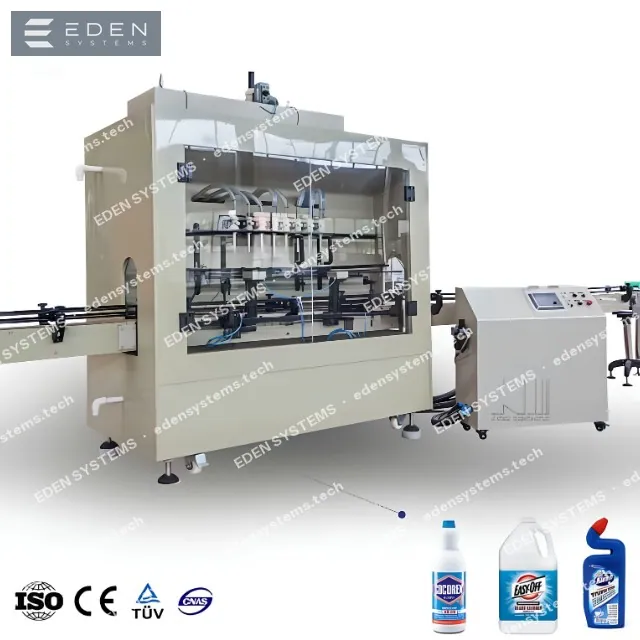
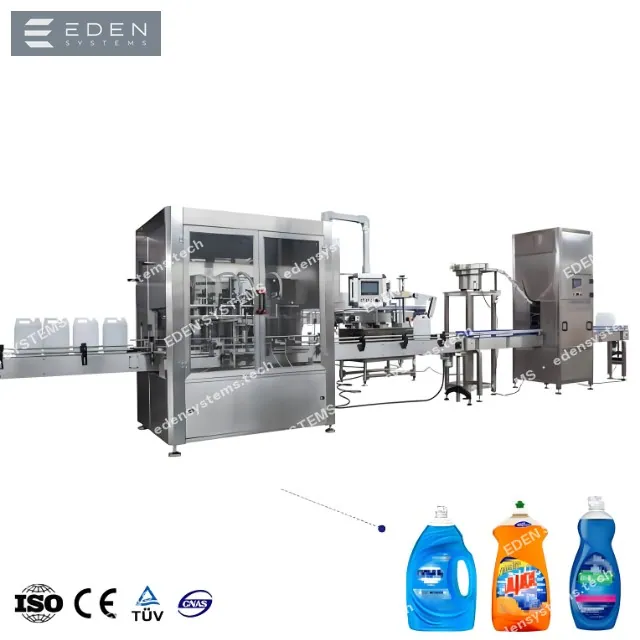
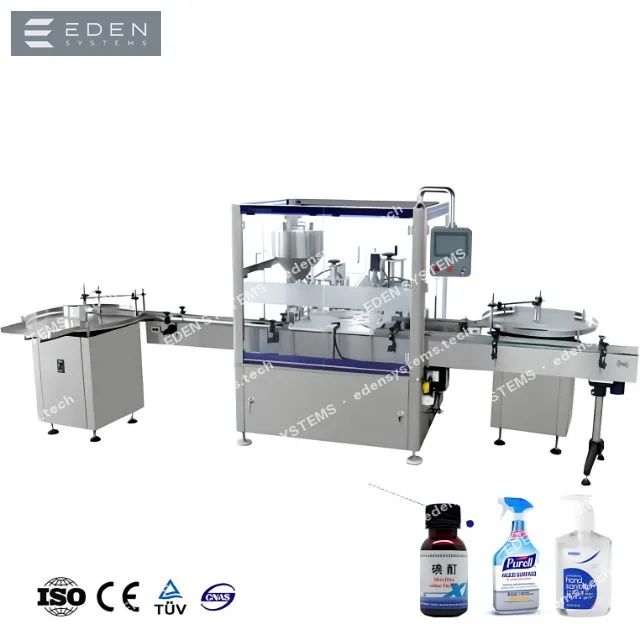
Core machines of the line
Equipment of the “Household Chemicals Filling Line” layout: each tile opens the catalog with series, specifications and a quote request for that machine.
Depalletizer and container infeed
Removes empty plastic or glass containers from the pallet, orients them via starwheel, and feeds them onto the line conveyor.
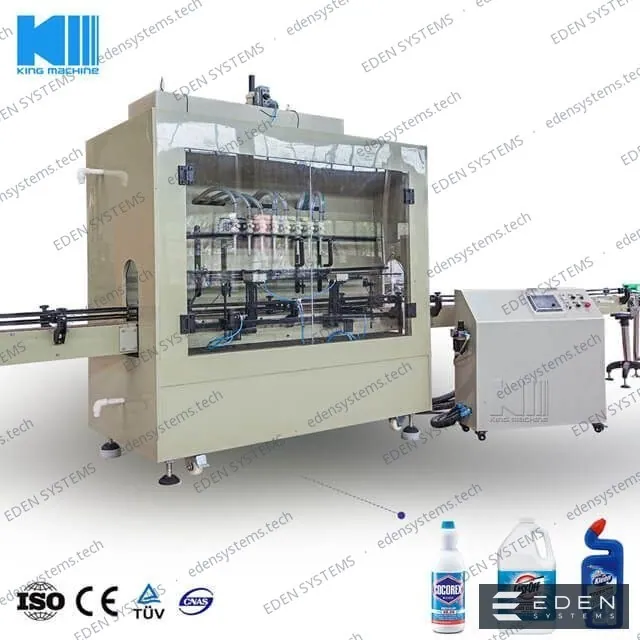
Rotary tri-block for viscous liquids
Rinsing, servo-controlled dosing per valve with a segmented fill speed profile, and capping on a single frame — no drips on foaming products.
Filling block for gel and thick soap
Piston or diaphragm pump with vacuum drip suction: no stringing or dripping at the nozzle on high-viscosity products.
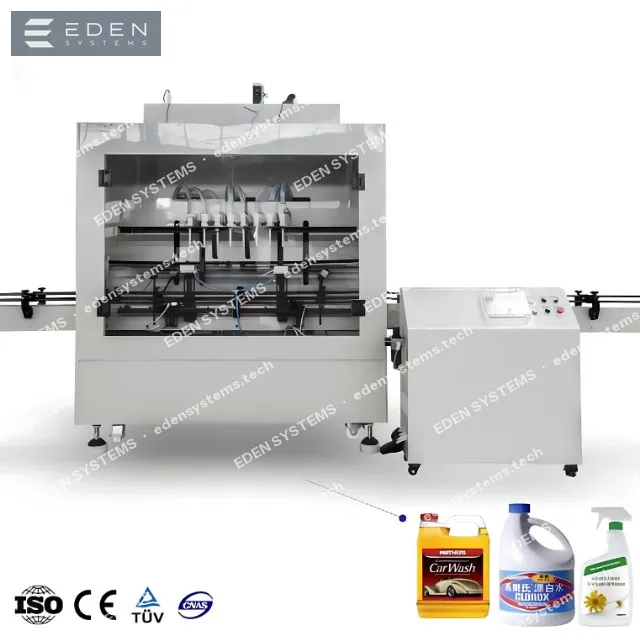
Line for chlorine-based and aggressive liquids
Product-contact parts in PTFE and chlorine-resistant stainless steel; a closed dosing circuit reduces vapor evaporation.
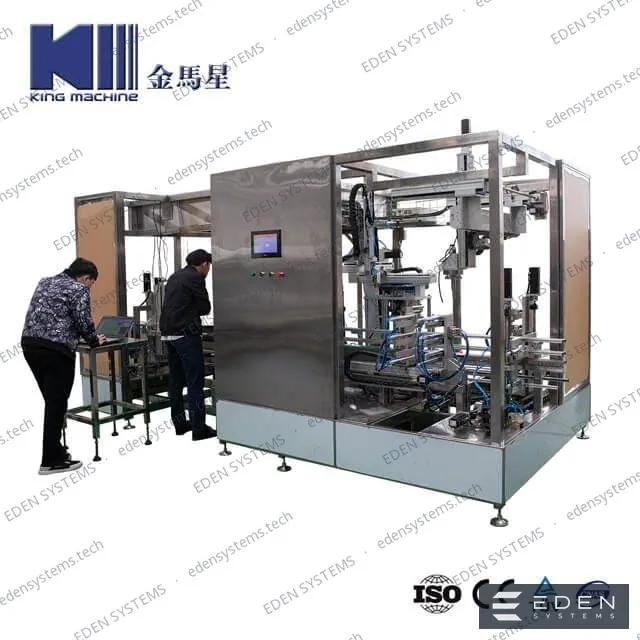
Quick-change format parts
Infeed and outfeed starwheels and neck grippers are changed without tools — switching to another bottle takes no more than 30 minutes.
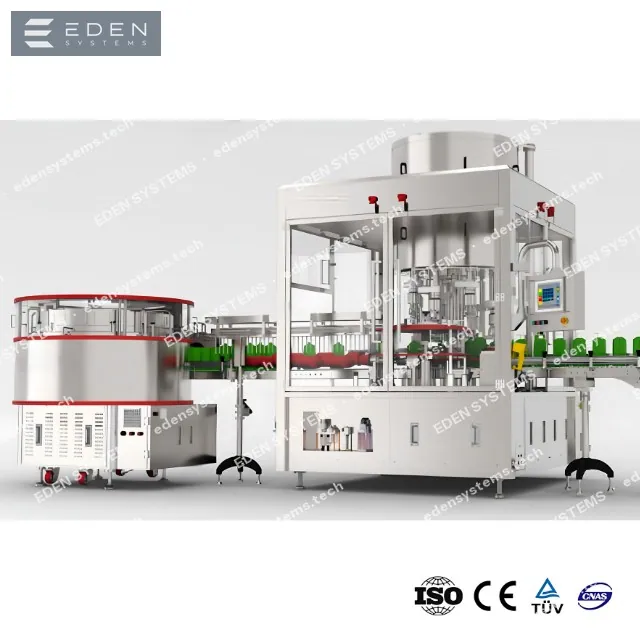
Capping machine
Screw cap application or trigger/pump fitting with torque control, suitable for irregularly shaped bottles as well.
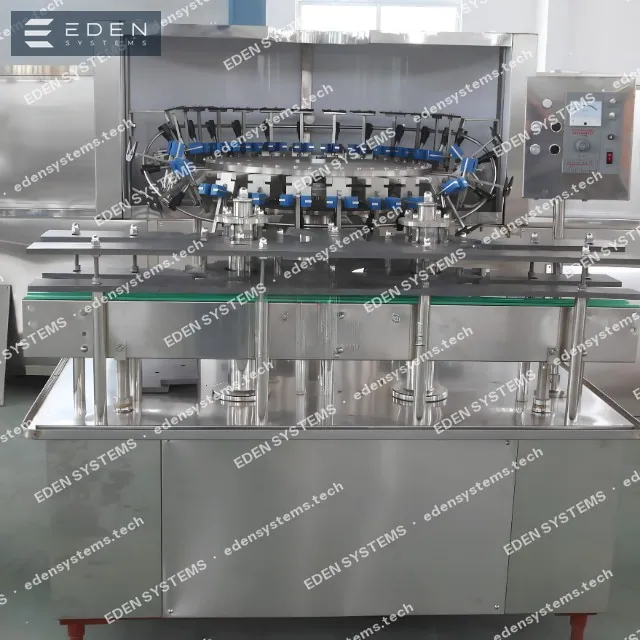
Fill level and cap inspector
Backlight inspection of fill level and cap seating, rejecting nonconforming containers before the labeler.
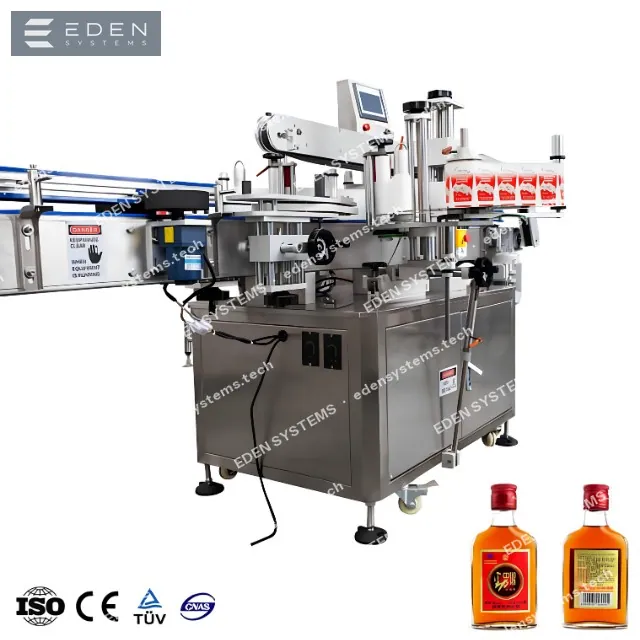
Labeling machine
Self-adhesive label on flat or round containers, with a back label and shoulder label on the bottle when needed.
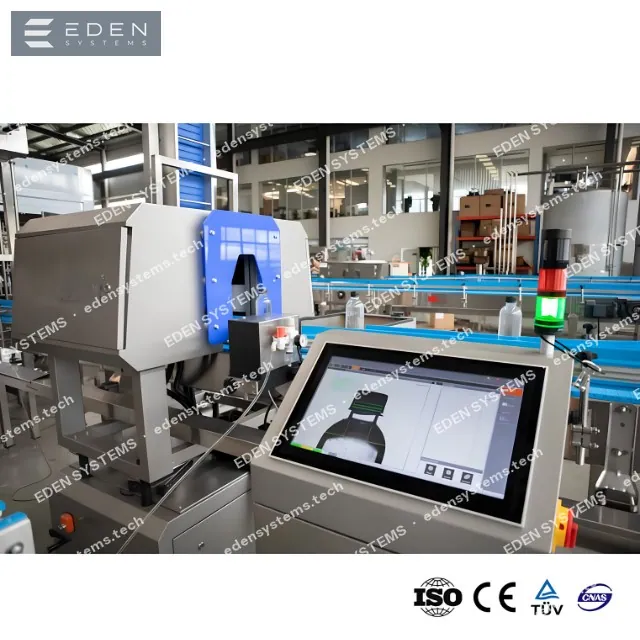
Date coder and batch marking
Inkjet printing of production date, shelf life, and batch number on the bottle and the case.
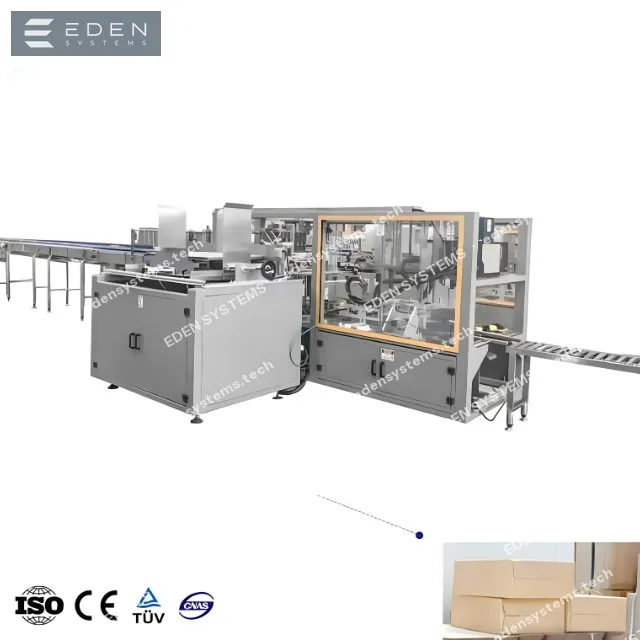
Case packing and palletizing
Loading bottles into a corrugated case with dividers, tape sealing, and layer-by-layer pallet formation with stretch-wrap.
Which closure do you use
The cap type defines the capping block: heads, feeding and orientation of the closure, torque or press-on force. State your option in the request and we will select the head and sorter for it.
24/410, 28/410
Dispensing pump / trigger sprayer
The dip tube is cut to the bottle height, the head screws it on without the tube twisting inside the container.
Capping unit: Capping head with oriented pump feed
24 mm, 28 mm
Flip-top / disc-top cap
The closed cap is fed pre-oriented to the label so the flap faces the right direction after capping.
Capping unit: Press head + tightening
PCO 1881 / 28 mm / 38 mm
Plastic screw cap
The tamper-evident band tears on opening. Torque is set on the HMI and monitored on every chuck.
Capping unit: Magnetic screwing head
foil 0.2–0.9 mm
Induction liner under the cap
The liner is welded to the finish after capping — tamper protection and seal integrity during transport.
Capping unit: In-line induction sealer
Auxiliary systems of the line
The engineering utilities without which a line never reaches its rated output: water and product preparation, sanitation, container handling.
Mixing area
Preparing detergents and cleaning agents.
- Jacketed, vacuum-capable reactors with an agitator for surfactants and thickeners
- Mass-based component dosing with batch-recipe logging
- Materials rated for aggressive chemistry: AISI 316L, PP or lining
- Filtration and deaeration before filling
Filling aggressive liquids
Chemically resistant product path.
- Pumps and seals rated for acids, alkalis and chlorine-based formulations
- Submerged anti-foam nozzle — filling without a foam cap
- Piston or flow-meter dosing with ±0.5% accuracy
- Explosion-proof design for solvents and alcohol-based formulations
Capping and seal integrity control
Trigger sprayers, flip-tops and tamper protection.
- Sorting and orientation of trigger and pump caps
- Torque control monitored per position
- Induction foil sealing for first-opening protection
- Seal integrity and cap-presence check with rejection
CIP station (clean-in-place)
Path flushing on product formula and color changeover.
- Alkali, acid and hot-water tanks holding temperature within ±2 °C
- Recipe-driven wash programs: phase time, concentration and flow are logged
- Flow meter on the supply line — actual flow is verified, not assumed from the nameplate
- Filtered detergent return to the tanks; discharge only once the solution is spent
Coding and inspection
Date, batch and hazard labeling per regulations.
- Inkjet or laser coder: date, shift, batch number, traceability code
- Fill-level, cap presence and seating inspection with automatic reject to a pocket
- Good/reject product counters logged per shift hour
- Ready for mandatory marking: case and pallet aggregation at the line outfeed
Packing and palletizing
Case, pallet and dangerous-goods marking as required.
- Shrink film pack or corrugated case, format tailored to the retailer's requirements
- Layer palletizer to a defined pattern, robotic version for constrained floor space
- Pallet wrapper with pre-stretch film: lower film consumption, pallet withstands transport
- SSCC pallet label printing and application, data handoff to the ERP system
Plant utilities
Ventilation, drains and effluent neutralization for the chemical area.
- Steam circuit or electric heating sized against peak thermal load
- Chilled water: chiller and glycol loop with a buffer tank
- Process-water piping, floor drains with traps and slope, condensate removal
- Line power panel sized per station load with a reserve for expansion
FAQ
Which filling method should I choose?
For free-flowing and aggressive liquids — an electromagnetic flowmeter, with no moving parts in the flow. For thick gels — a piston. For products labeled by mass — weight-based filling.
Can chlorine-based products be filled?
Yes, but the product path is built in PP or PVDF, not stainless steel. We confirm the formulation before design.
How much does the Household Chemicals Filling Line cost?
Price on request: the budget depends on output, container type, line composition and the level of automation. After a short brief we send a preliminary estimate within 1–2 working days and a full quotation broken down by machine within 3–5 days.
What are the delivery and commissioning lead times?
Standard machines ship 8–12 weeks after the specification is confirmed, complete lines 12–20 weeks. Transport takes 2–6 weeks depending on the route; installation and commissioning on site take 2–4 weeks, with operator training included.
What output does this line reach?
The working range is 1,000–12,000 units/h. Exact output is confirmed against your container, product and shift plan: we calculate the line balance and keep a margin on the bottleneck machine.
Request a quote: Household Chemicals Filling Line
Tell us the product, the container and the target output — we will return the line composition, a layout, a budget range and a delivery schedule.
Related solutions
Lines with a similar equipment set — useful when you plan several products on one site.
1,000–20,000 bph
Vegetable Oil Filling Line
Weight or volumetric oil filling into PET, glass and tinplate with capping, induction sealing, labelling and case packing.
Open solution2,000–36,000 bph
Drinking Water Filling Line, 0.33–1 L
Rinser-filler-capper monobloc for PET, water treatment, labelling and shrink packing.
Open solution800–6,000 units/h
Cosmetics Filling Line
Creams, lotions and gels: piston filling, pump capping and tube sealing.
Open solutionServices for this line
Engineering, logistics, installation and service that turn this line into a working production site.
Digital layer
Any line can be supplied with a digital layer
SCADA, MES, OEE monitoring, batch traceability and integration with plant systems — engineered together with the line, not bolted on later.