

Lines by Product Type
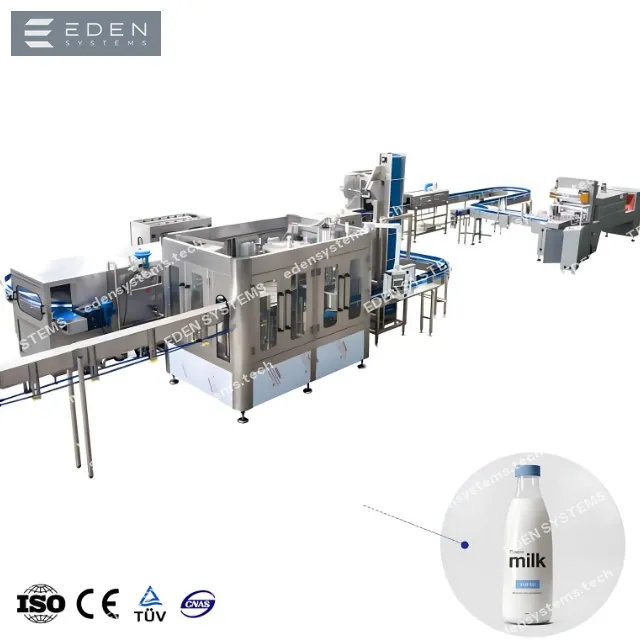
Milk and Dairy Product Filling Line: Sanitation Comes First
Dairy products allow the least margin for error. Capacity is not the deciding factor; hygienic equipment design, reliable CIP, and how effectively the filling area is isolated from ambient air are what matter.
Three Filling Hygiene Levels
Conventional filling is used for short-shelf-life products that are refrigerated and sold quickly. The requirements are hygienic product-path design and regular CIP.
Ultra-clean filling takes place in a positive-pressure area supplied with filtered air, with treatment of the containers and closure materials. It significantly extends the shelf life of pasteurized products without requiring full aseptic processing.
Aseptic filling requires a sterile product, sterile container, sterile closure, and sterile filling zone. This is the most expensive level and enables unrefrigerated storage for months, but it also demands the corresponding level of operating discipline.
What Defines the Project
- Product
- Milk, kefir, drinkable yogurt, fermented baked milk, and cream have different viscosities, filling behavior, and tendencies to foam.
- Container
- PET bottles, polymer cups sealed with membranes, pouches, and cartons each require a dedicated machine. Few universal solutions are available.
- Shelf Life
- The target shelf life determines the required filling hygiene level and, consequently, the equipment class and room requirements.
- Heat Treatment
- Pasteurization or ultra-high-temperature treatment is performed before filling in a separate section equipped with a heat exchanger and holding tube.
- CIP and SIP
- Automated clean-in-place and sterilize-in-place systems with recorded parameters: concentration, temperature, time, and flow. Manual cleaning is not a viable option in dairy production.
Packaging Format and Equipment
| Package | Products | Machine Type |
|---|---|---|
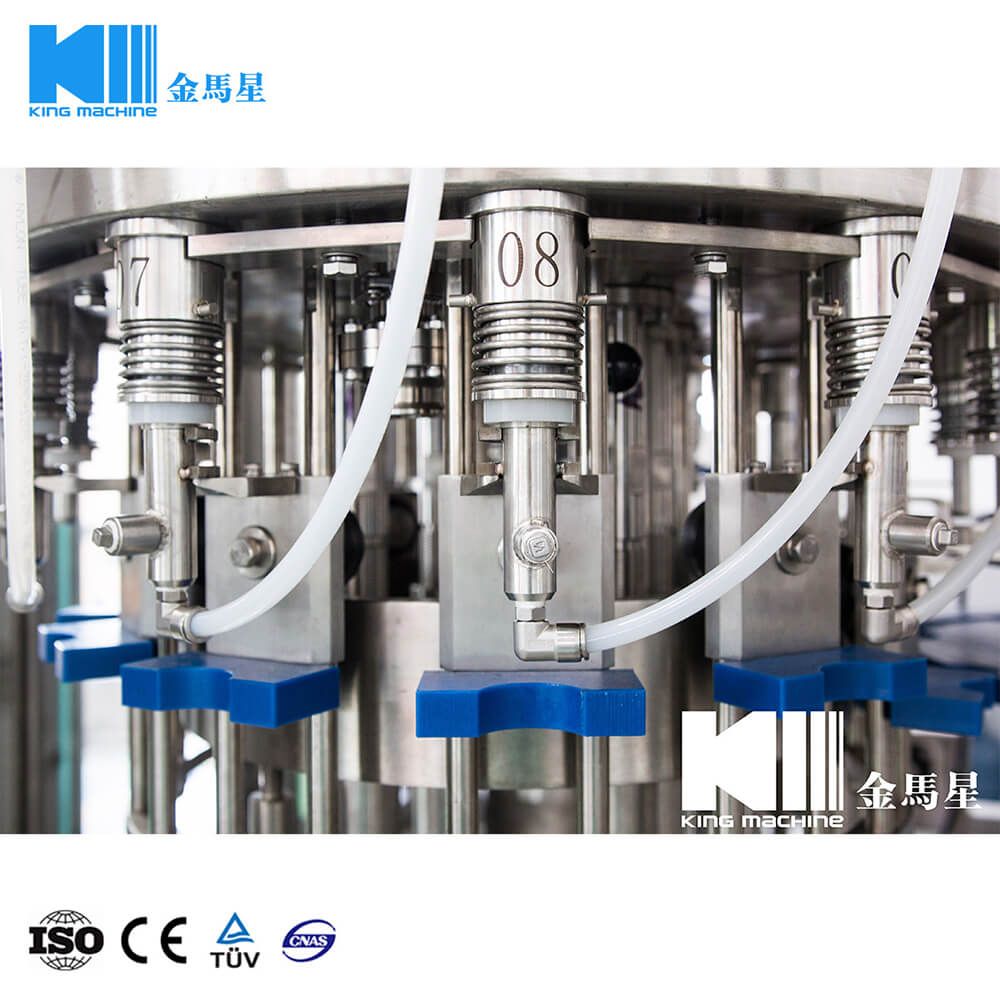
| 0.5-1 L PET bottle | Milk, kefir, and drinkable yogurt | Rotary filler with capper and rinser |
| Membrane-sealed cup | Yogurt, sour cream, and cultured dairy products | Cup filling machine with membrane sealing and overcapping |
| Pouch (film) | Milk and kefir | Vertical form-fill-seal machine |
| Pail and large container | Sour cream and cottage cheese for HoReCa | Semiautomatic filler with capper |
Facility and Personnel
A dairy production area involves more than the line itself. It requires hygiene zoning, airlocks, sanitary entry stations, air control in the filling zone, separate flows for raw materials and finished products, refrigerated rooms, and a cold chain maintained through shipment.
Personnel must be trained not only to operate the machines but also to follow sanitation procedures: CIP sequence, solution concentration checks, and recordkeeping. In practice, most microbiological problems are caused not by equipment but by failure to follow cleaning procedures at the end of a demanding shift.
FAQ
Can milk be filled on a line used for water?
No. The requirements for hygienic product-path design, CIP, and filling-zone cleanliness are fundamentally different. A water line can physically fill milk, but it cannot ensure consistent product safety.
What does ultra-clean filling provide compared with conventional filling?
It significantly extends the shelf life of pasteurized products at a much lower cost than full aseptic filling. For many regional manufacturers, it is the optimal compromise between line cost and distribution capabilities.
How difficult is changeover between products?
Switching between products with different viscosities requires not only new dosing parameters but also complete sanitation of the product path. Production is therefore scheduled to minimize transitions during a shift, beginning with the most sensitive products.
Read next
Ready solutions
Equipment catalog
Project services
Related projects
Calculation on the topic
We will calculate your line
Describe the product, packaging formats and planned volume — we will prepare a line scheme, specification and preliminary budget estimate with payback.
- Line scheme and unit specification for your product
- Budget range and payback period
- Site requirements: power, water, personnel