

Line Components and Technologies
Filling Triblock: How It Works and When It Is Needed
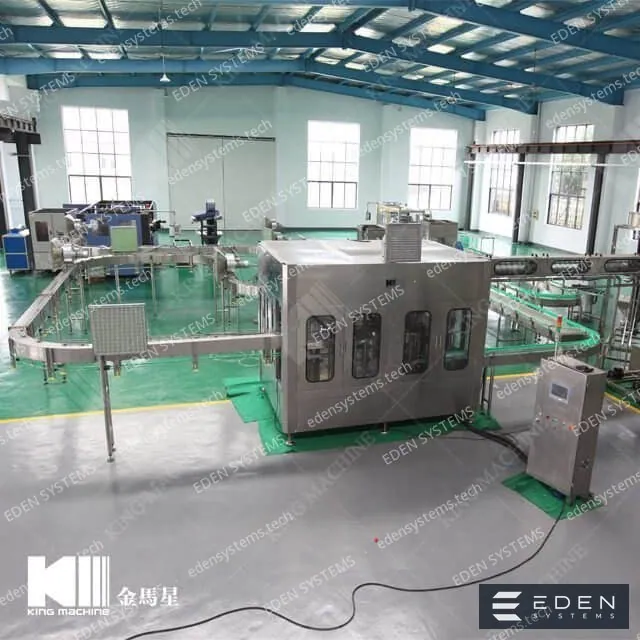
A triblock combines rinsing, filling, and capping on a single frame with a common drive. It is the primary unit in most modern lines and determines both capacity and the microbiological reliability of the filling process.
Why Combine Three Machines into One
Historically, the rinser, filler, and capper were separate machines connected by conveyors. Each transfer point meant an open bottle neck moving through the facility, an accumulation buffer, and additional conveyor length.
In a triblock, the bottle is transferred between units by neck-handling starwheels and remains inside a single enclosed circuit. The path from rinsing to a sealed cap is reduced to seconds, and the number of points where contamination can enter the container is reduced severalfold.
The second benefit is synchronization. A common drive and unified control system eliminate speed mismatches among the units, which require buffers and constant adjustment when separate machines are connected.
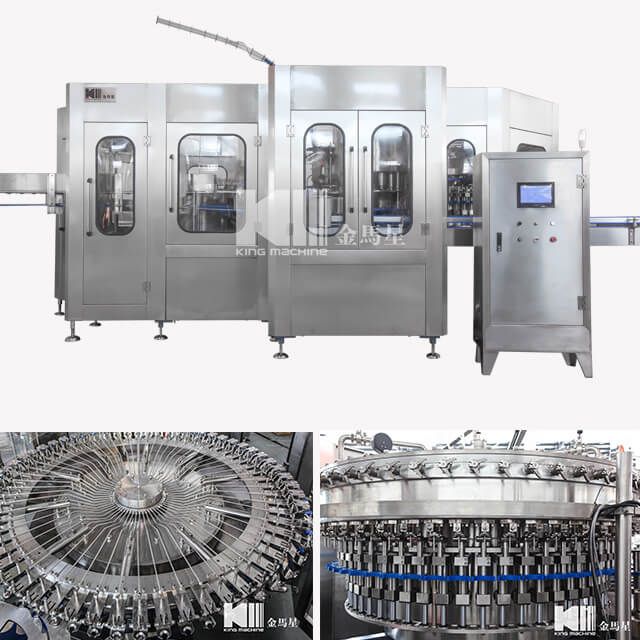
The Three Units and How They Work
- Rinser
- Neck gripping, 180° inversion, rinsing of the inside surface with purified or ozonated water, draining, and blow-off. On lines using purchased containers, this is the only protection against dust and foreign matter in the bottle.
- Filler
- A carousel of filling valves. The valve type is determined by the product: gravity level filling, isobaric filling under counterpressure, volumetric piston filling, or weight filling for viscous products.
- Capping Unit
- Cap feeding, orientation, and application, with tightening torque controlled by a magnetic clutch. Glass bottles use crown-cap crimping, while 19 L containers use press-on caps.
Filling Types and Suitable Products
| Filling Type | Principle | Products | Accuracy |
|---|---|---|---|
| Gravity Level Filling | Product flows by gravity to a defined level | Water, still beverages | ±1% by volume |
| Isobaric | The container is pressurized with gas, and filling occurs at equal pressure | Carbonated beverages, beer, kvass, mineral water | ±1% |
| Volumetric Piston | The dose is measured by piston travel | Oil, sauces, cosmetics, chemicals | ±0.5% |
| Weight Filling | The dose is controlled by a load cell | Viscous and high-value products, large containers | ±0.2-0.5% |
| Hot Filling | The product is filled at 85-92 °C | Juices, teas, and fruit drinks without preservatives | ±1% |
How Capacity Is Calculated
A triblock’s rated capacity is specified for a particular container volume and product. When changing from 0.5 L to 1.5 L, the same machine will produce approximately three times fewer bottles per hour because filling time increases with volume.
The number of valves determines the maximum output: the more valves on the carousel, the more bottles can be filled simultaneously. However, increasing the number of valves increases the carousel diameter and therefore the machine footprint and site requirements.
A practical selection guideline is to specify capacity with a 15-20% margin above planned demand. This margin covers losses from changeovers, sanitation, and minor stops, which consume a significant portion of an actual shift.
FAQ
How does a triblock differ from a monoblock and a combiblock?
A monoblock generally combines two operations, most often filling and capping. A triblock combines three: rinsing, filling, and capping. A combiblock also includes blowing the bottle from a preform, integrating container production and filling into a single machine.
Can one triblock handle both water and juice?
It can handle water and still beverages. Hot-filled juice requires a heat-resistant product path and a temperature-maintenance system, while juice with pulp requires valves with a larger flow passage. Versatility is limited, so the product range should be defined before selecting the machine.
How often is sanitation required?
The schedule is determined by the product and microbiological test results. For drinking water, standard practice is CIP at the end of each shift and more intensive cleaning on a defined schedule. Missed sanitation is not immediately apparent and can ultimately result in a product recall.
Read next
Ready solutions
Equipment catalog
Project services
Related projects
Calculation on the topic
We will calculate your line
Describe the product, packaging formats and planned volume — we will prepare a line scheme, specification and preliminary budget estimate with payback.
- Line scheme and unit specification for your product
- Budget range and payback period
- Site requirements: power, water, personnel