

Dairy Filling Line
Milk, kefir, yogurt and drinking cream: filling into PET and HDPE bottles, cups with foil sealing, or film pouches — at ESL or aseptic sanitary level.
- Product
- Milk, kefir, ryazhenka, drinking yogurt, cream
- Container
- PET and HDPE, 0.2–2 L; cup, 100–500 ml; film pouch, 0.2–1 L
- Output
- 2,000–18,000 units/h
- Sanitation
- ESL or aseptic, laminar-flow cleanroom class
- Washing
- Automatic CIP, SIP steam sterilization before shift
- Container disinfection
- Hydrogen peroxide followed by sterile-air drying
- Product temperature
- 2–6 °C
- Materials
- AISI 316L, sanitary fittings
Line parameters
About the solution
Dairy products demand the strictest sanitation: the filling zone runs inside an enclosed laminar-flow booth supplied with sterile air, and the equipment supports automatic CIP washing and SIP steam sterilization before every shift.
Container format determines the line's makeup. For bottles — a monoblock with peroxide disinfection; for cups — a filler with foil sealing and lid application; for pouches — a vertical form-fill-seal machine with longitudinal and cross seams.
Built into the design
Laminar-flow booth
The filling zone is isolated; air is supplied through HEPA filters under positive pressure.
Automatic washing
Closed-loop CIP with caustic, acid and sanitizer, with a program for each product.
Three container formats
Bottle, cup and pouch share common product preparation — the range can grow gradually.
Batch traceability
Wash, temperature and volume parameters are logged for every batch for quality control.
Line composition along the product flow
8 positions along the product flow. Every unit opens in the catalog: series, specifications, scope of supply and a quote request.
- 1
1. Milk receiving and preparation
Receiving, cooling, separating, standardizing and homogenizing.
Dairy product filling →
- 2
2. Pasteurization
Plate pasteurizer with holding and heat recovery, ESL or UHT mode.
Dairy product filling →
- 3
3. Container preparation
Bottle blowing or cup and film-roll feeding, peroxide disinfection.
PET stretch blow moulding equipment →
- 4
4. Bottle filling
Monoblock in a laminar booth with flowmeter filling and capping.
Dairy product filling →
- 5
5. Cup filling (alternative)
Filling, foil sealing, lid application and date coding.
Dairy product filling →
- 6
6. Pouch filling (alternative)
Vertical form-fill-seal machine with longitudinal and cross seams.
Dairy product filling →
- 7
7. Date coding and inspection
Date and batch coding, weight and pack-integrity checks.
Marking and quality inspection →
- 8
8. Tray packing and palletizing
Group packing into a tray or case, palletizer and wrapping.
Packing and palletising →
Line model selection
Selecting an ESL milk filling line
Output is given for a 1 L bottle; shelf life depends on the cleanliness of the filling zone and raw milk quality.
| Model | Filling valves | Container | Output | Shelf life |
|---|---|---|---|---|
| EDS-D-ESL-8 | 8 | PET/HDPE 0.2–1 L | 3,000–5,000 btl/h | up to 30 days |
| EDS-D-ESL-12 | 12 | PET/HDPE 0.2–2 L | 6,000–9,000 btl/h | up to 45 days |
| EDS-D-ESL-18 | 18 | PET/HDPE 0.2–2 L | 12,000–18,000 btl/h | up to 45 days |
The shelf life is achieved through a laminar flow of sterile air in the filling zone and container disinfection before filling; the condition is a maintained 2–6 °C cold chain.
Cup filling machine
| Model | Lanes | Cup volume | Output | Closure type |
|---|---|---|---|---|
| EDS-CUP-4 | 4 | 100–200 mL | 4,000–6,000 pcs/h | foil seal + lid |
| EDS-CUP-6 | 6 | 100–450 mL | 8,000–12,000 pcs/h | foil seal + lid |
| EDS-CUP-8 | 8 | 100–450 mL | 12,000–16,000 pcs/h | foil seal + lid |
For a two-chamber cup (yogurt with topping), output drops by 15–20% due to the extra dose.
Pouch line for milk and plant-based drinks
| Parameter | Value |
|---|---|
| Pouch volume | 200 mL – 1 L |
| Output | 3,000–6,000 pouches/h |
| Film material | multilayer PE/PA laminate |
| Seam type | longitudinal + transverse heat-seal |
The pouch is a cost-effective alternative to a bottle in terms of packaging cost per liter of product, used for domestic markets and HoReCa.
Line process flow
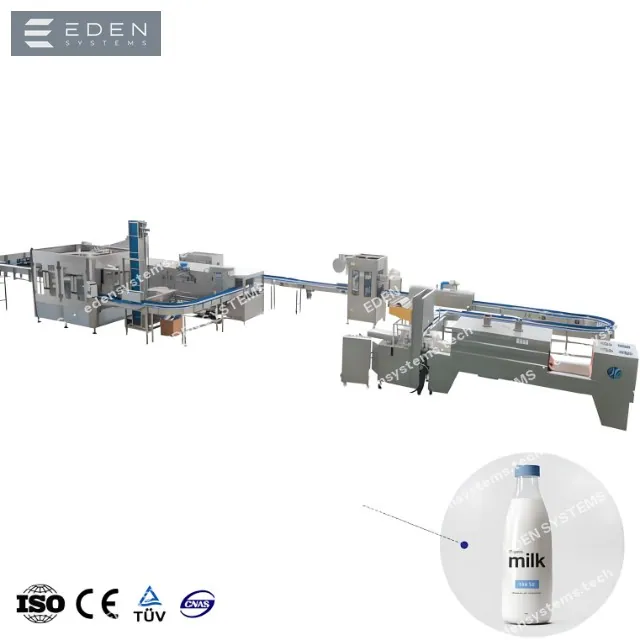
The dairy line is built around a temperature chain from the storage tank to the finished-product pallet: the product must not warm above 6 °C at any stage. The head and tail composition depends on the container type — an ESL bottle, a yogurt cup, or an economical pouch.
Key line features
- Laminar flow of sterile air in the filling zone reduces microbial load without full aseptic processing
- CIP/SIP cleaning of the loop without disassembly — alkali, acid, sanitizer, rinsing in a closed cycle
- Mass and piston dosers with a wide-bore passage for yogurt with fruit pieces
- Product-contact parts in AISI 316L stainless steel, polished with no dead zones
- Product temperature control at every stage — from the tank to capping
- Fast format-part changeover between container volumes within a shift
- 100% inspection of seal hermeticity and cap seating
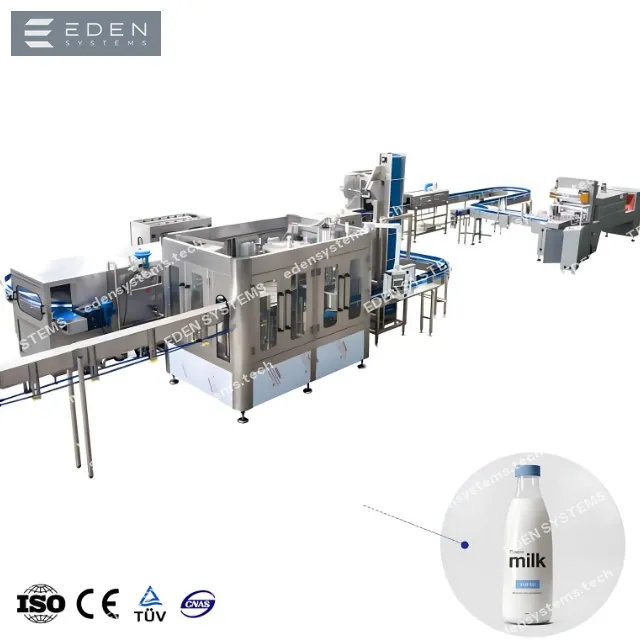
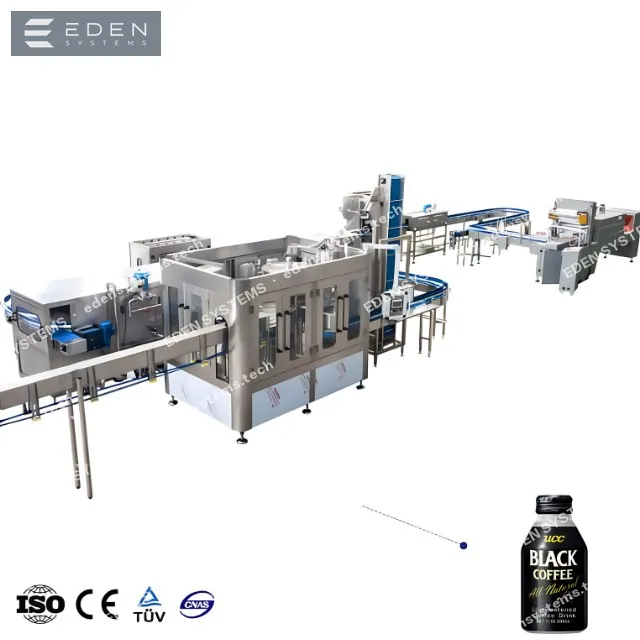
Layout for drinking milk and fermented dairy drinks in PET/HDPE containers with cold filling.
- 1Intermediate product storage tank (2–6 °C)
- 2Empty container infeed and disinfection
- 3Filling in a laminar flow of sterile air
- 4Capping machine with cap disinfection
- 5Cap seal inspector
- 6Labeling machine (sleeve or self-adhesive)
- 7Date coder and batch marking
- 8Case packing and cold storage
Key line stations
What sits behind the nameplate output: contact-part execution, operating logic and service points for every station.
Blending and UHT block
Product preparation
- High-shear blending unit: sugar, concentrate and stabilizer disperse without clumping.
- Tubular or plate heat exchanger, holding and cooling on a set curve.
- Homogenizer up to 200 bar — a stable emulsion with no separation in the bottle.
- Jacketed buffer tank maintains the filling-supply temperature.
Core machines of the line
Equipment of the “Dairy Filling Line” layout: each tile opens the catalog with series, specifications and a quote request for that machine.
Intermediate product storage tank
A jacketed, agitated tank maintains 2–6 °C before filling, buffering the throughput difference between pasteurization and the line.
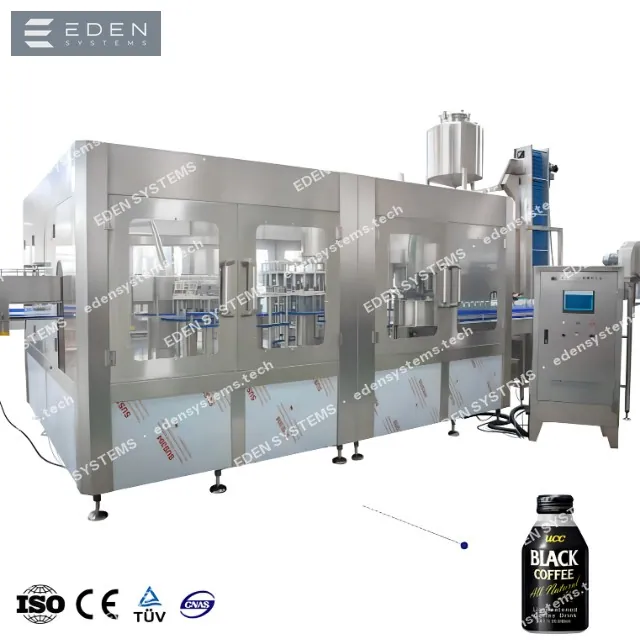
ESL filling line for PET/HDPE
Filling in a laminar flow of sterile air with UV or peroxide disinfection of the container and cap — shelf life up to 45 days under refrigerated chain.
Cup filling machine
Thermoforming or preformed cup infeed, dosing by weight or volume, foil sealing, and lid application on a single unit.
Doser for yogurt with fruit filling
Mass or piston doser with a wide-bore passage for fruit pieces, with layered filling for two-chamber cups.
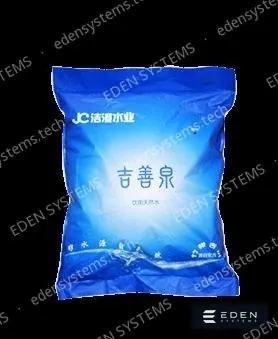
Pouch filling line (doypack/pillow pack)
Pouch forming from film on a roll, aseptic filling, and hermetic seam sealing — an economical package for milk and plant-based drinks.
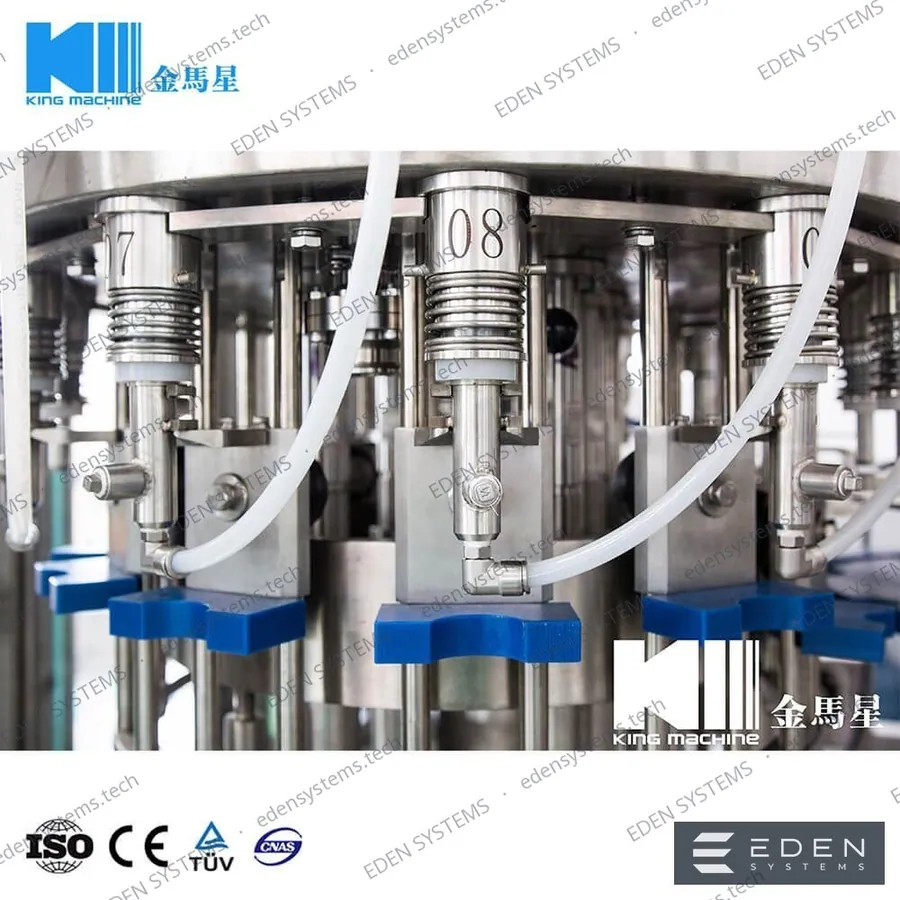
CIP station for the process loop
Circulation cleaning with alkali, acid, and sanitizer without disassembling the piping — between product changeovers and per the shift schedule.
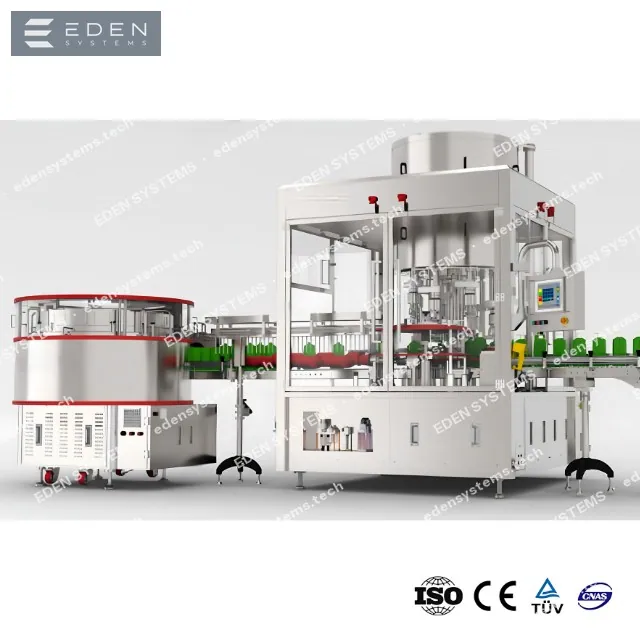
Capping machine
Screw-cap application on the bottle or heat-sealing of a lid onto the cup with hermeticity checked on every unit.
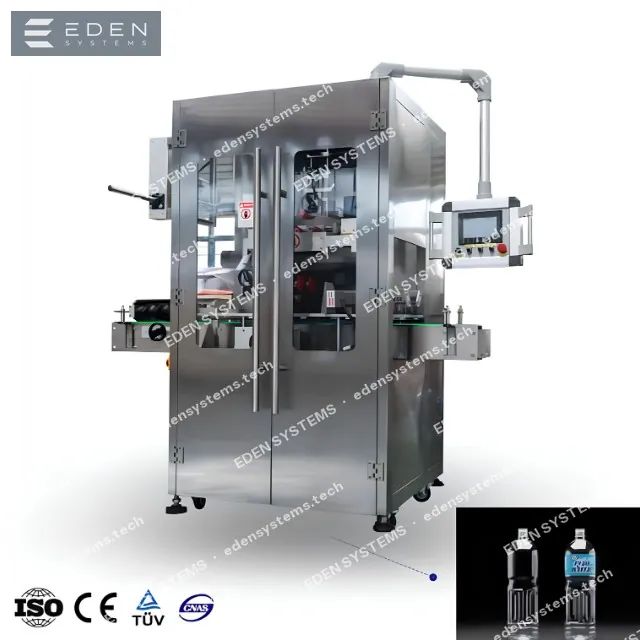
Labeling machine
Shrink-sleeve or self-adhesive film label on the bottle and group marking on multipacks of cups.
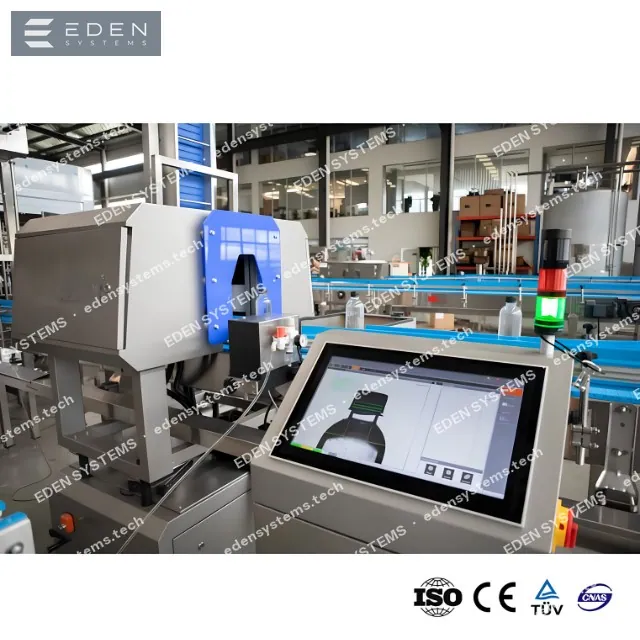
Date coder and batch marking
Printing of fill date, shelf life, and batch number on the bottle, cup, and case with readability checking.
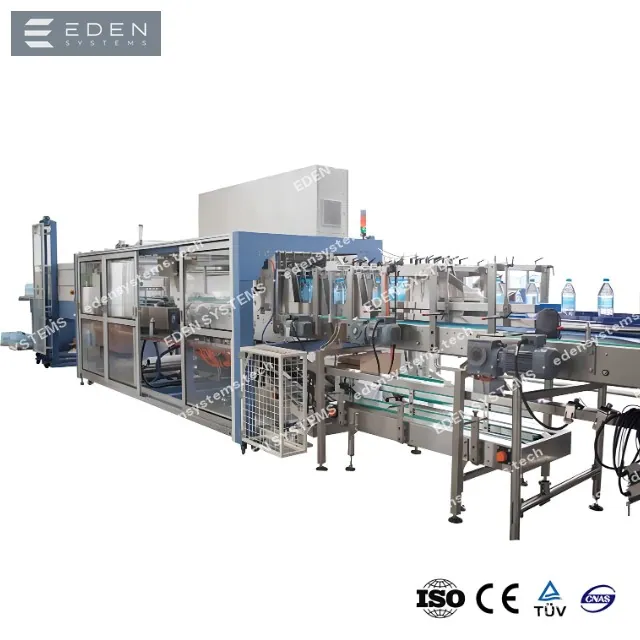
Shrink film / case packing and palletizing
Group packing of cup multipacks in shrink film, loading bottles into cases, and layer-by-layer pallet formation with stretch-wrap.
Which closure do you use
The cap type defines the capping block: heads, feeding and orientation of the closure, torque or press-on force. State your option in the request and we will select the head and sorter for it.
PCO 1881 / 28 mm / 38 mm
Plastic screw cap
The tamper-evident band tears on opening. Torque is set on the HMI and monitored on every chuck.
Capping unit: Magnetic screwing head
Ø 75, Ø 95
Foil seal + protective lid for cups
The foil is heat-sealed around the rim with temperature and dwell-time control, then a plastic lid snaps on top.
Capping unit: Heat-sealing station
foil 0.2–0.9 mm
Induction liner under the cap
The liner is welded to the finish after capping — tamper protection and seal integrity during transport.
Capping unit: In-line induction sealer
Auxiliary systems of the line
The engineering utilities without which a line never reaches its rated output: water and product preparation, sanitation, container handling.
Water treatment
Potable-grade water for reconstitution and sanitation.
- The scheme is built from a feed-water analysis: mechanical filtration, carbon, softening, reverse osmosis
- Station output sized with a 20% margin over peak line consumption and wash cycles
- Membranes with automatic flushing and VFD-driven pumps — no water hammer
- UV and ozone disinfection, AISI 316 buffer tank with a breather filter
Milk receiving and preparation
From the receiving bay to standardization.
- Weight-based receiving, cooling to 4 °C and tank storage
- In-line separation and fat standardization with sensor control
- Homogenization up to 200 bar — a stable emulsion with no cream separation
- Jacketed storage tanks with an agitator and CIP washing
Pasteurization and UHT processing
The thermal profile sets shelf life.
- Plate pasteurizer with up to 90% heat recovery
- UHT plant at 137 °C with a 4-second hold for extended shelf life
- Automatic diversion of under-pasteurized product
- Temperature-profile logging per batch
Aseptic and ESL loop
A clean filling zone for dairy products.
- Laminar-flow enclosure over the filler carousel, cleanliness class per product requirements
- Container sterilization with hydrogen peroxide or UV before filling
- Sterile air barrier and positive pressure in the filling zone
- SIP steam sterilization of the product path before changeover
CIP station (clean-in-place)
The dairy path is washed after every shift, without exception.
- Alkali, acid and hot-water tanks holding temperature within ±2 °C
- Recipe-driven wash programs: phase time, concentration and flow are logged
- Flow meter on the supply line — actual flow is verified, not assumed from the nameplate
- Filtered detergent return to the tanks; discharge only once the solution is spent
Coding and inspection
Date, time and line number on every pack.
- Inkjet or laser coder: date, shift, batch number, traceability code
- Fill-level, cap presence and seating inspection with automatic reject to a pocket
- Good/reject product counters logged per shift hour
- Ready for mandatory marking: case and pallet aggregation at the line outfeed
Packing and palletizing
Multipack grouping, palletizing and cold storage.
- Shrink film pack or corrugated case, format tailored to the retailer's requirements
- Layer palletizer to a defined pattern, robotic version for constrained floor space
- Pallet wrapper with pre-stretch film: lower film consumption, pallet withstands transport
- SSCC pallet label printing and application, data handoff to the ERP system
Plant utilities
Chilled water, steam and ice water for the dairy area.
- Steam circuit or electric heating sized against peak thermal load
- Chilled water: chiller and glycol loop with a buffer tank
- Process-water piping, floor drains with traps and slope, condensate removal
- Line power panel sized per station load with a reserve for expansion
FAQ
What is the difference between ESL and aseptic?
ESL gives a shelf life of 21–45 days under cold chain and costs considerably less. Aseptic allows room-temperature storage for up to 6 months, but requires a sterile zone, trained personnel and a stricter regime.
Can several formats be filled on one line?
Product preparation is shared, while filling sections differ. This is a standard scheme for a dairy plant with a broad product range.
How much does the Dairy Filling Line cost?
Price on request: the budget depends on output, container type, line composition and the level of automation. After a short brief we send a preliminary estimate within 1–2 working days and a full quotation broken down by machine within 3–5 days.
What are the delivery and commissioning lead times?
Standard machines ship 8–12 weeks after the specification is confirmed, complete lines 12–20 weeks. Transport takes 2–6 weeks depending on the route; installation and commissioning on site take 2–4 weeks, with operator training included.
What output does this line reach?
The working range is 2,000–18,000 units/h. Exact output is confirmed against your container, product and shift plan: we calculate the line balance and keep a margin on the bottleneck machine.
Request a quote: Dairy Filling Line
Tell us the product, the container and the target output — we will return the line composition, a layout, a budget range and a delivery schedule.
Related solutions
Lines with a similar equipment set — useful when you plan several products on one site.
1,000–20,000 bph
Vegetable Oil Filling Line
Weight or volumetric oil filling into PET, glass and tinplate with capping, induction sealing, labelling and case packing.
Open solution2,000–36,000 bph
Drinking Water Filling Line, 0.33–1 L
Rinser-filler-capper monobloc for PET, water treatment, labelling and shrink packing.
Open solution1,000–12,000 units/h
Household Chemicals Filling Line
Filling of detergents and surfactants into bottles and jerrycans, trigger and pump capping.
Open solutionServices for this line
Engineering, logistics, installation and service that turn this line into a working production site.
Digital layer
Any line can be supplied with a digital layer
SCADA, MES, OEE monitoring, batch traceability and integration with plant systems — engineered together with the line, not bolted on later.