

Lines by Product Type
Beer Filling Line: Oxygen, Isobaric Filling, and Container Formats
Oxygen is beer's primary enemy during filling. It enters the package during filling and capping, and the product's actual shelf life depends on how effectively it is excluded.
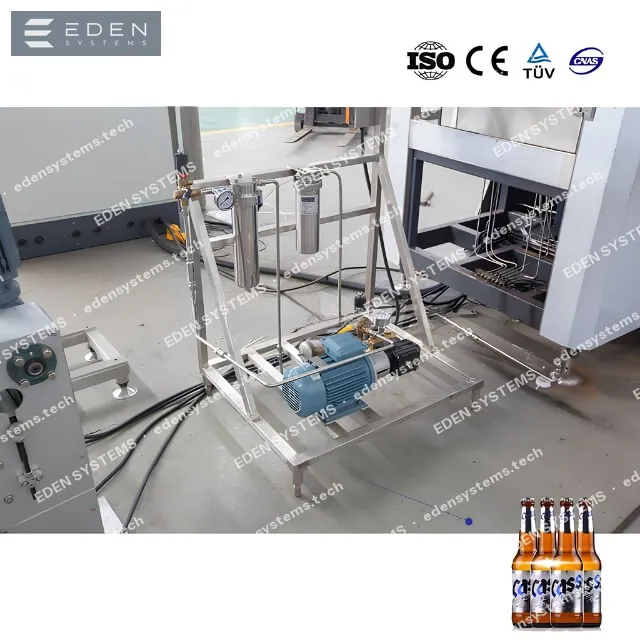
What Determines Filling Quality
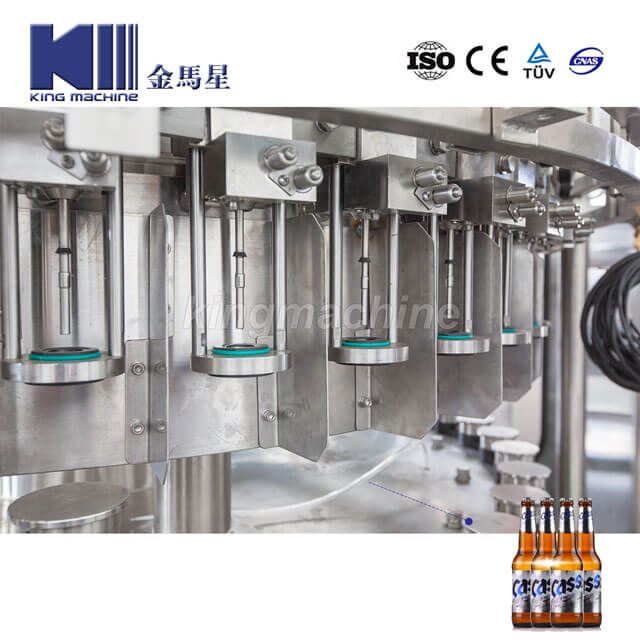
Beer is filled isobarically: the container is evacuated or purged with carbon dioxide, then pressurized to the ring bowl pressure, allowing the product to flow without foaming or losing carbonation.
The metric used to evaluate the line is the increase in dissolved oxygen during filling. A good machine adds very little; a poor one negates the brewer's work: the product ages, develops cardboard-like notes, and has a shorter shelf life.
The second consideration is high-pressure jet foaming before capping: a short jet of water or product creates foam, which displaces air from the neck so the closure is applied over foam rather than air.
Line Sections
- 1
Container Preparation
New glass bottles are rinsed. Returnable bottles are washed in an alkaline bottle washer and inspected.
- 2
Empty-Container Inspection
Checks for chipped finishes, foreign objects, and residual liquid. Mandatory for returnable glass.
- 3
Isobaric Filling
Evacuation or CO2 purging, pressurization, counter-pressure filling, and pressure release.
- 4
Capping
Crown caps for glass, screw caps for PET, and keg fittings for kegs.
- 5
Pasteurization
Tunnel pasteurization for bottles and cans, or flash pasteurization before filling.
- 6
Labeling and Date Coding
Main label, back label, neck label, and application of the filling date.
- 7
Packaging
Case packing or shrink wrapping, followed by palletizing.
Packaging Formats
| Container | Filling Requirements | Additional Equipment |
|---|---|---|
| 0.33-0.5 L glass | Isobaric filling and crown capping | Bottle washer for returnable containers and tunnel pasteurizer |
| 1-2 L PET | Isobaric filling and screw capping | Blowing or ready-container feeding, plus barrier solutions for shelf life |
| Aluminum can | Isobaric filling and lid seaming | Can seamer and dedicated conveying |
| 20-50 L kegs | Washing and filling on a keg washer-filler | Keg line in a separate area |
Low-Capacity Lines
Craft breweries rarely need lines producing tens of thousands of bottles per hour. Compact solutions are assembled for volumes up to several thousand bottles per hour: an isobaric filler with 6-12 valves, a capper, semiautomatic labeling, and manual case packing.
Speed is less important here than the same two parameters that matter on large lines: minimum oxygen pickup and consistent fill volume. Saving money by choosing simple counter-pressure filling without evacuation results in a short shelf life that must then be offset through logistics and discounts.
FAQ
Is pasteurization required?
It depends on the product and distribution channel. Live, unpasteurized beer has a short shelf life and requires a cold chain. Pasteurization—tunnel pasteurization of finished packages or flash pasteurization before filling—extends shelf life and provides access to nationwide retail chains.
What is required for returnable glass bottles?
A bottle washer and empty-container inspection system are required. This represents a significant part of the budget, but it pays for itself through the value of the glass when container return rates are stable.
How is oxygen pickup measured?
With an oxygen meter that measures dissolved oxygen in the product before filling and in the finished package. This is a standard line acceptance procedure and should be included in the on-site test protocol.
Read next
Ready solutions
Equipment catalog
Project services
Related projects
Calculation on the topic
We will calculate your line
Describe the product, packaging formats and planned volume — we will prepare a line scheme, specification and preliminary budget estimate with payback.
- Line scheme and unit specification for your product
- Budget range and payback period
- Site requirements: power, water, personnel