

Lines by Product Type
Glass Filling Line for Wine and Spirits
A wine line is built around two requirements: minimizing product contact with oxygen and maintaining an accurate fill level in transparent bottles. Everything else follows from these two requirements.
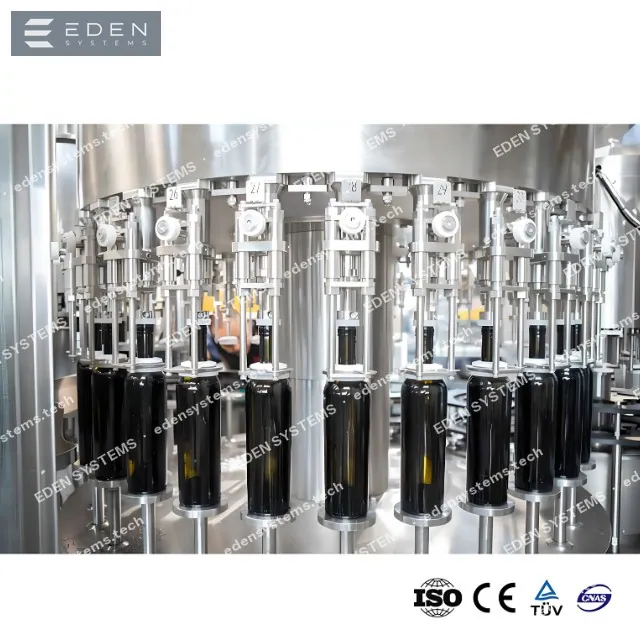
Oxygen Is the Primary Enemy
Dissolved oxygen degrades a wine's aroma within weeks. Filling is therefore performed under inert gas: the bottle is pre-purged with nitrogen, the filling valve operates by level, and the neck is treated with gas again before capping.
Oxygen requirements are less stringent for spirits, but explosion protection becomes necessary: alcohol vapors require appropriately rated electrical equipment and ventilation in the production area.
Level filling is selected because consumers can see the level inside the bottle. A volumetric filler is more accurate by quantity, but variations in the internal volume of the bottles produce an uneven-looking batch.
Line Components
- Depalletizer and Rinser
- Glass bottles arrive on pallets and are rinsed with water or blown out with ionized air.
- Vacuum Level Filler
- Provides a uniform fill level with minimal air entrainment.
- Capping Unit
- Natural or synthetic cork, screw cap, or crown cap for sparkling wine.
- Wire Hood Applicator
- For sparkling wines: applies the wire hood after corking.
- Capsule Applicator
- Applies and crimps a heat-shrink or polylaminate capsule.
- Labeler
- Usually applies three labels: front, back, and neck label.
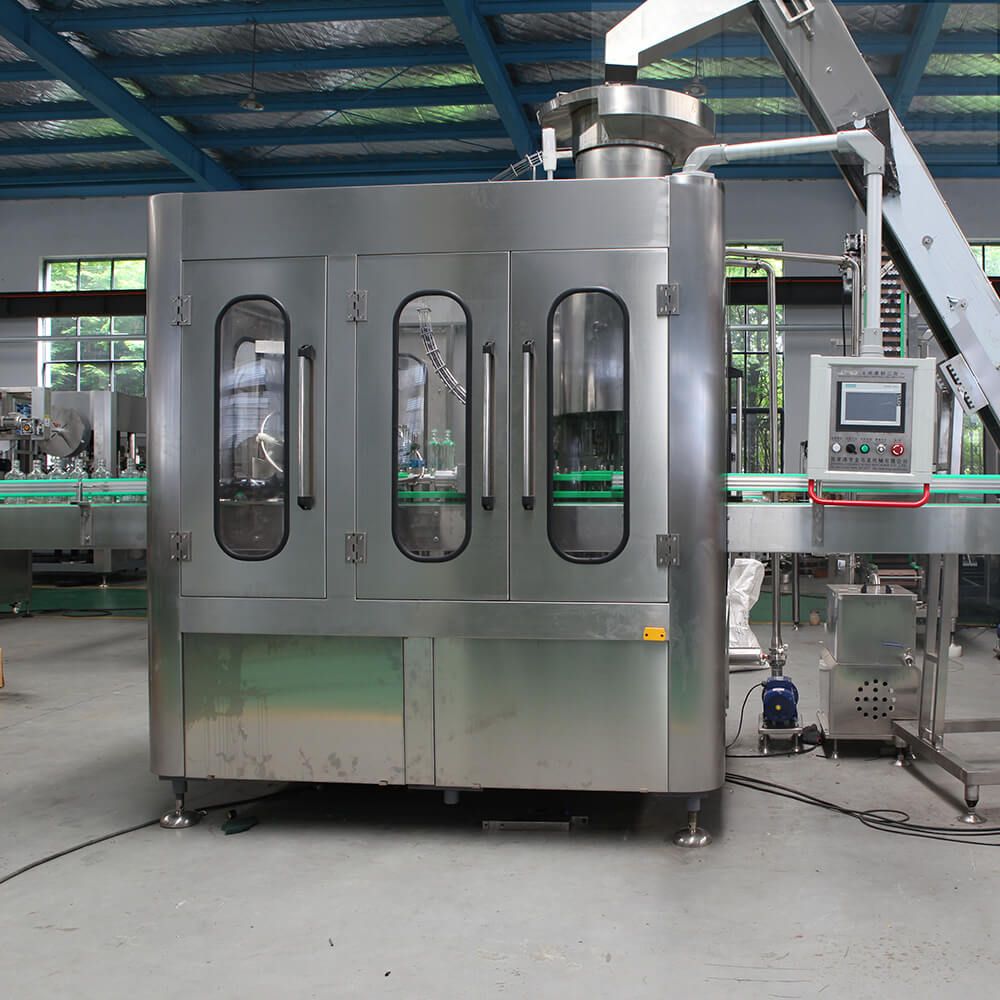
Three Standard Configurations
| Product | Filling Type | Special Features |
|---|---|---|
| Still wine | Vacuum level filling | Nitrogen purging, cork or screw cap |
| Sparkling wine | Isobaric | Counterpressure, crown cap or cork with wire hood |
| Spirits | Level or volumetric filling | Explosion-proof design and dosing accuracy |
FAQ
What minimum production capacity is practical?
For a small winery, the practical range is 1000-3000 bottles per hour. Below this range, a compact monoblock is more practical; above it, a complete line with automatic container feeding is appropriate.
Can both wine and spirits be filled?
Yes, provided that interchangeable format parts and separate cleaning procedures are used. However, an explosion-proof design will be required throughout the entire line.
Is a dedicated bottle-washing section required?
A rinser is sufficient for new glass bottles. A complete bottle washer is only required when using returnable containers.
Read next
Ready solutions
Equipment catalog
Project services
Related projects
Calculation on the topic
We will calculate your line
Describe the product, packaging formats and planned volume — we will prepare a line scheme, specification and preliminary budget estimate with payback.
- Line scheme and unit specification for your product
- Budget range and payback period
- Site requirements: power, water, personnel