

Labeling Solution
Selecting the right labeling technology for your container, run size and budget: pressure-sensitive, roll-fed hot-glue, PVC sleeve, or cold glue for returnable glass.
- Technologies
- Pressure-sensitive, roll-fed hot-glue, PVC sleeve, cold glue
- Output
- 2,000–36,000 units/h
- Container
- PET, glass, can, jerrycan, tube, round and shaped
- Positions
- Body label, back label, neck band, cap label
- Positioning accuracy
- ±1 mm
- Orientation by mark
- Optical sensor and servo drive
- Control
- Presence, position and application quality, rejection
- Format changeover
- 15–40 minutes
Line parameters
About the solution
A label is both a shelf-facing element and a consumable on every bottle. Pressure-sensitive labeling gives the best quality on small and medium runs; roll-fed hot-glue is cheaper per bottle and wins on large volumes; PVC sleeves cover the entire bottle surface and work with shaped containers.
We select the machine to match the line's cycle time with a 10–15 % margin so the labeler never becomes the bottleneck, and we always build in label-presence and positioning control with rejection.
Built into the design
Cost-based technology selection
We calculate consumable cost per 1,000 bottles for each technology — the decision is made on the numbers, not habit.
Precise positioning
A servo drive and mark sensor keep labels within ±1 mm even at high speed.
Shaped-container handling
Sleeve labeling with a shrink tunnel covers non-standard shapes where pressure-sensitive labels won't sit properly.
Inspection and rejection
A camera checks presence, angle and application quality; rejects are removed from the line automatically.
Line composition along the product flow
7 positions along the product flow. Every unit opens in the catalog: series, specifications, scope of supply and a quote request.
- 1
1. Container feeding and orientation
Screw separator and feed starwheels orienting the bottle by mark or seam.
Labelling equipment →
- 2
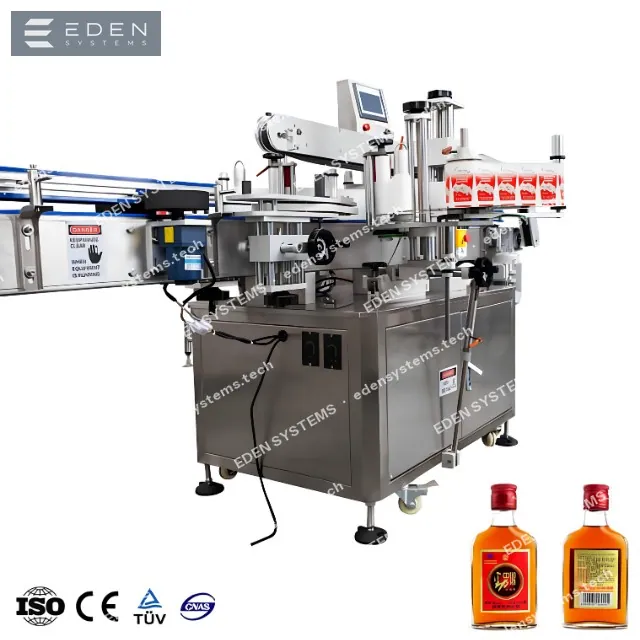
2. Pressure-sensitive labeling
Single- or two-position application of the body label and back label.
Labelling equipment →
- 3
3. Hot-glue labeling (alternative)
Roll-fed hot-glue application — the lowest consumable cost on large runs.
Labelling equipment →
- 4
4. Sleeve labeling (alternative)
Applying a PVC sleeve and shrinking it in a steam or air tunnel.
Labelling equipment →
- 5
5. Brushing and smoothing
Brushes and rollers press the label down, removing bubbles and creases.
Labelling equipment →
- 6
6. Date coding
Inkjet, laser or thermal-transfer printer: date, shift, batch.
Marking and quality inspection →
- 7
7. Label inspection
Camera check of presence, angle and code readability with rejection.
Marking and quality inspection →
Line model selection
Selecting labeler type by container
Speed is given for a 0.5 L bottle on a fully automatic line.
| Label type | Applicable containers | Output | Feature |
|---|---|---|---|
| Roll-fed glue (hot melt) | glass, large PET | up to 24,000 btl/h | low label cost per unit |
| Self-adhesive | PET, glass, HPC bottle | 1,000-24,000 btl/h | fast design changeover, clean maintenance |
| Shrink sleeve | shaped PET containers, cups | up to 24,000 btl/h | full 360° coverage, anti-counterfeit protection |
| Cold glue | premium glass | 1,000-20,000 btl/h | foil and embossed paper |
A single line often combines two label types: glue label on the body and sleeve on the cap/neck.
Speed by container type
| Container | Glue label | Self-adhesive | Shrink sleeve |
|---|---|---|---|
| Water/CSD bottle | 3,000-36,000 btl/h | 1,000-24,000 btl/h | up to 24,000 btl/h |
| Juice bottle | 3,000-36,000 btl/h | - | up to 24,000 btl/h |
| Glass (beer, wine) | - | 1,000-24,000 btl/h | - |
| HPC/cosmetics bottle | - | 1,000-24,000 btl/h | 1,000-20,000 btl/h |
The top speed is reached on large-diameter round containers; shaped and small containers reduce throughput by 15-30%.
Line process flow
The choice of labeling machine is determined by container shape, label material and required speed: roll-fed glue for large batches of glass and PET, self-adhesive for fast design changeovers, and shrink sleeve when a shaped bottle needs to be fully covered.
Key features of the labeling module
- "No bottle - no label" mode: a variable-frequency drive synchronizes feed with the container flow
- Quick-change star wheels and guides for container diameter without a long line stop for changeover
- Servo-driven label positioning accurate to 1 mm in height and angle
- Compatibility with self-adhesive, glue and shrink sleeve labels on the same frame (on request)
- Camera-based inspection of label position and code legibility before packing
- PLC and operator panel with format recipes for fast SKU changeover
Layout for large batches of water, juice and CSD in glass or PET.
- 1Bottle infeed to the rotary table
- 2Grip and rotate the bottle
- 3Apply hot melt glue to the label
- 4Press the label onto the circumference with a brush roller
- 5Cure the glue seam
- 6Inspect label position
- 7Transfer to the packing module
Key line stations
What sits behind the nameplate output: contact-part execution, operating logic and service points for every station.
Labeling machine
Container decoration
- Servo-driven label web feed, positioning accuracy ±1 mm at line speed.
- Bottle orientation by seam or by mark — the label is applied on the front face.
- Fast reel change without stopping: dual-roll holder with splicing.
- Label-presence and skew inspection module with rejection to a reject chute.
Core machines of the line
Equipment of the “Labeling Solution” layout: each tile opens the catalog with series, specifications and a quote request for that machine.
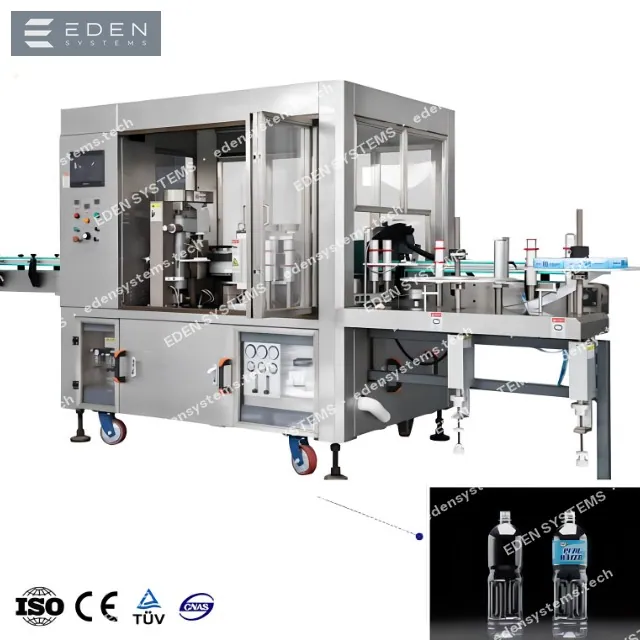
Roll-fed labeler (hot melt glue)
Hot melt glue is applied to a roll paper or film label, and a drum presses it onto the rotating bottle - the classic solution for glass and large PET containers.
Self-adhesive labeler
Label is peeled off the backing and rolled onto the container without a glue unit - fast design changeover and minimal maintenance.
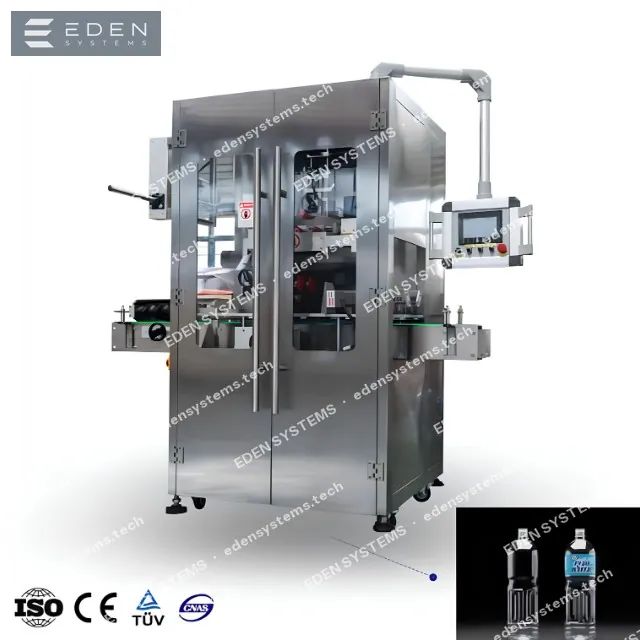
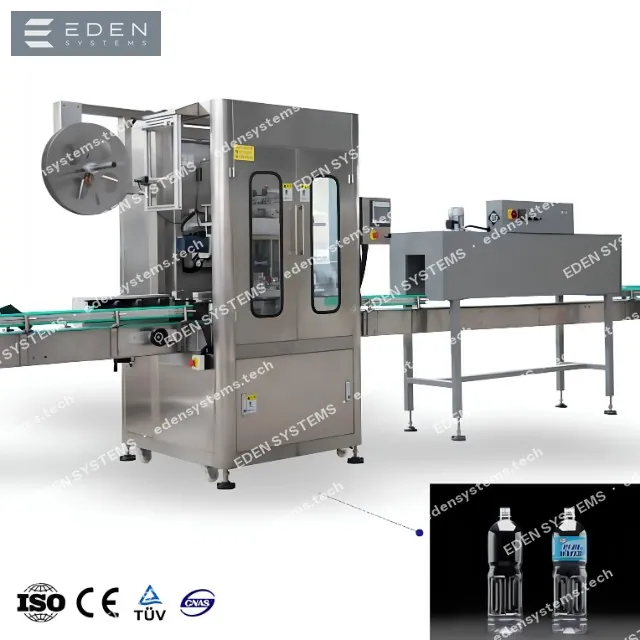
Shrink sleeve labeler
A PVC/PET sleeve is placed over the entire container or cap and shrunk in a steam tunnel - full coverage of shaped bottles.
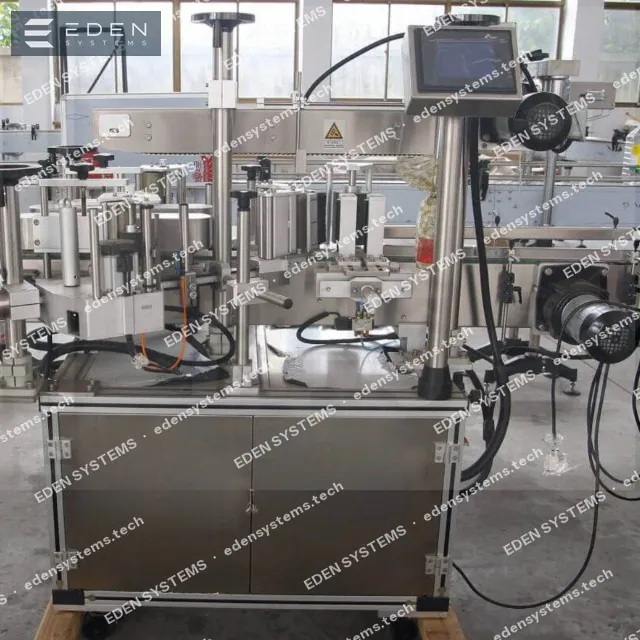
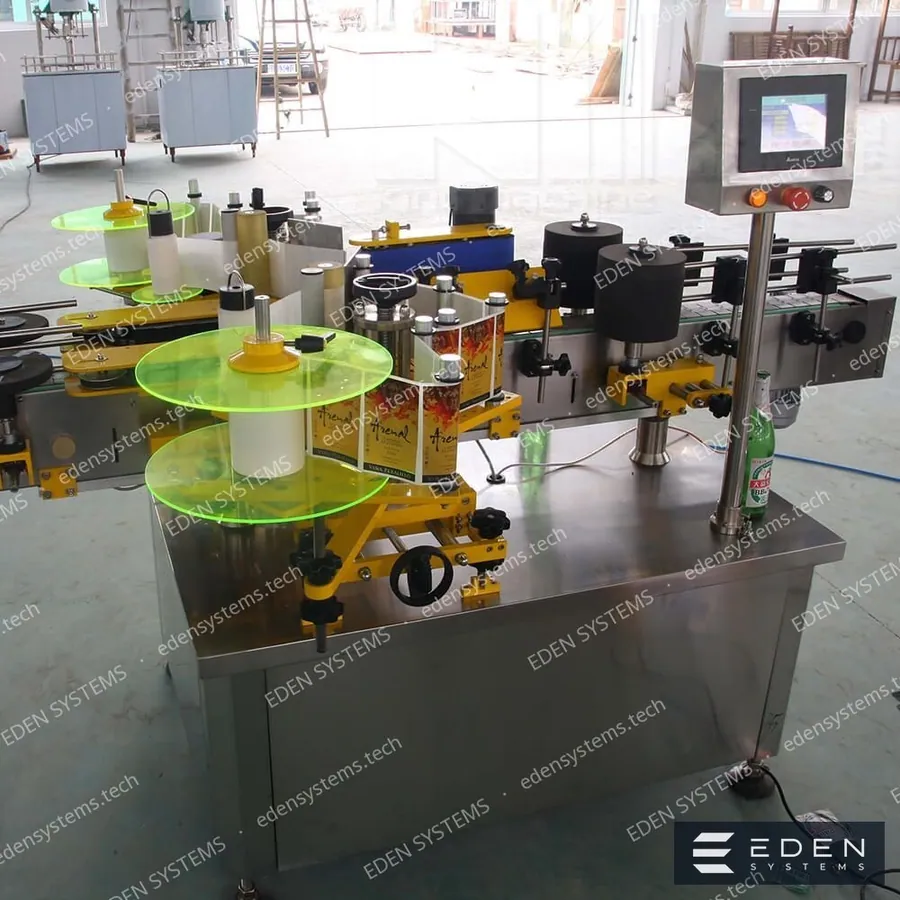
Linear (wrap-around) labeler
A flat or side face of the container receives the label without rotating the bottle - for canisters, household chemical bottles and shaped packaging.
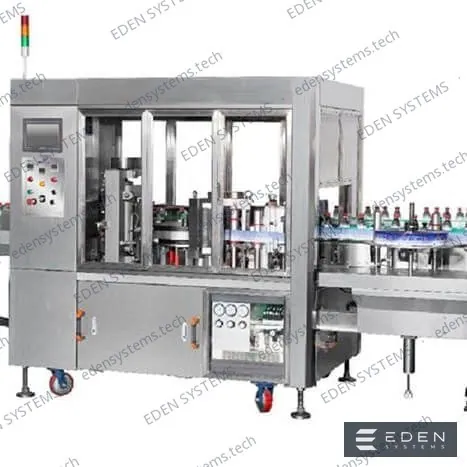
Two-sided and three-sided labeler
Simultaneous application of labels on two or three faces of the container in a single pass - saves space and synchronizes front and back label positioning.
Cold glue labeler
Rotary application of pre-cut paper or foil labels onto cylindrical containers - for premium glass and beverages.
Steam shrink tunnel
Uniform shrinking of the sleeve label using steam or hot air around the full circumference of the container without skewing or wrinkling.
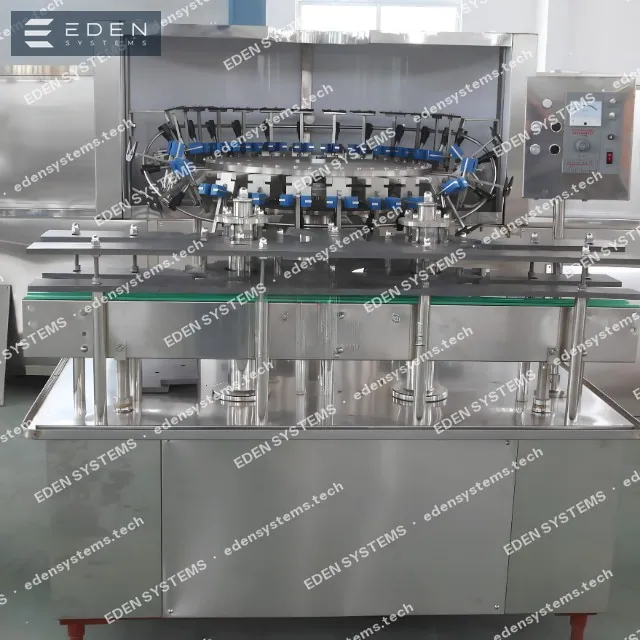
Label and code inspector
A camera checks label position, printed code legibility and sleeve integrity before packing.
Auxiliary systems of the line
The engineering utilities without which a line never reaches its rated output: water and product preparation, sanitation, container handling.
Container feeding and orientation
Label accuracy starts at the conveyor.
- Screw and star-wheel infeed matched to the container geometry
- Servo-driven bottle orientation by seam or registration mark
- Hold-down belts for stable positioning during application
- Format change with a changeover kit in 20–30 minutes
Label applicators
Pressure-sensitive, hot-melt and shrink-sleeve.
- Servo web feed with ±1 mm positioning accuracy at line speed
- Modules for front, back, wrap-around and neck labels
- Twin-reel splicing holder — changeover without a stop
- Shrink tunnel for sleeve labels with heating zones
Coding and inspection
Date, batch and traceability code on the label.
- Inkjet or laser coder: date, shift, batch number, traceability code
- Fill-level, cap presence and seating inspection with automatic reject to a pocket
- Good/reject product counters logged per shift hour
- Ready for mandatory marking: case and pallet aggregation at the line outfeed
Inspection and rejection
Print-quality control.
- Vision camera for presence, skew and code readability
- Reject to a pocket without stopping the main flow
- Reject counter by cause — a baseline for tuning the station
- Code verification before aggregation
Conveying systems
Interfacing the labeling section with filling and packing.
- Air conveyor for empty containers with air filtration and neck guide rails
- Slat-top conveyor with independent drives and accumulation buffers between stations
- AISI 304 frame, Siemens / Schneider drives and controls, Sick photo sensors
- Photoelectric jam detection with automatic section stop before a line stoppage
FAQ
Which is cheaper — pressure-sensitive or roll-fed?
Above roughly 10 million bottles a year, roll-fed hot-glue wins several times over on consumables. Below that volume, the difference is offset by equipment and maintenance cost.
Can a labeler be added to an existing line?
Yes, this is one of the most common retrofits. We select the machine to match your cycle time, conveyor height and electrical interfaces.
How much does the Labeling Solution cost?
Price on request: the budget depends on output, container type, line composition and the level of automation. After a short brief we send a preliminary estimate within 1–2 working days and a full quotation broken down by machine within 3–5 days.
What are the delivery and commissioning lead times?
Standard machines ship 8–12 weeks after the specification is confirmed, complete lines 12–20 weeks. Transport takes 2–6 weeks depending on the route; installation and commissioning on site take 2–4 weeks, with operator training included.
What output does this line reach?
The working range is up to 36,000 units/h. Exact output is confirmed against your container, product and shift plan: we calculate the line balance and keep a margin on the bottleneck machine.
Request a quote: Labeling Solution
Tell us the product, the container and the target output — we will return the line composition, a layout, a budget range and a delivery schedule.
Related solutions
Lines with a similar equipment set — useful when you plan several products on one site.
1,000–20,000 bph
Vegetable Oil Filling Line
Weight or volumetric oil filling into PET, glass and tinplate with capping, induction sealing, labelling and case packing.
Open solution2,000–36,000 bph
Drinking Water Filling Line, 0.33–1 L
Rinser-filler-capper monobloc for PET, water treatment, labelling and shrink packing.
Open solution2,000–24,000 bph
Beer Bottling Line (Glass)
Isobaric filling with low TPO, crown capping and tunnel pasteurization.
Open solutionServices for this line
Engineering, logistics, installation and service that turn this line into a working production site.
Digital layer
Any line can be supplied with a digital layer
SCADA, MES, OEE monitoring, batch traceability and integration with plant systems — engineered together with the line, not bolted on later.