

Production Startup
Semiautomatic or Automatic: How to Select the Automation Level
Choosing between a semiautomatic production area and an automatic line is not simply a choice between “inexpensive” and “expensive.” It is a choice between a low initial investment with a high unit cost and the opposite combination. The calculation must cover several years.
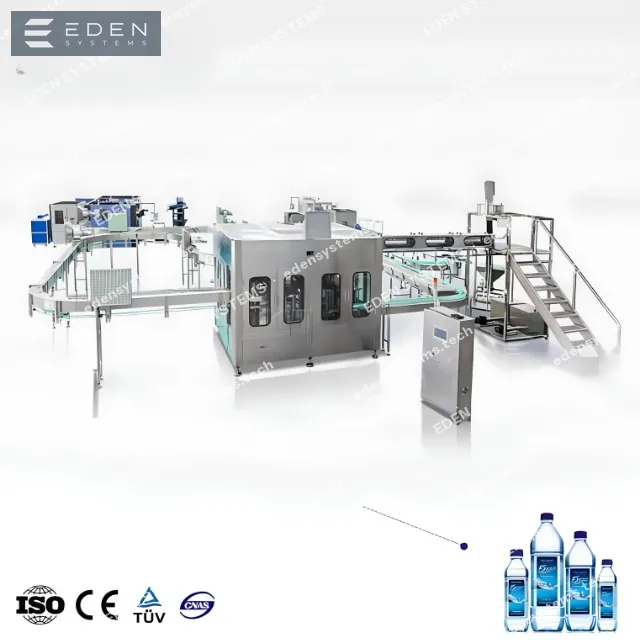
The Real Difference
A semiautomatic production area consists of separate machines with operators moving the product between them. An operator places the bottle under the filler, removes it, transfers it to the capper, and packs it into a case. The equipment is inexpensive, the footprint is small, and startup is fast.
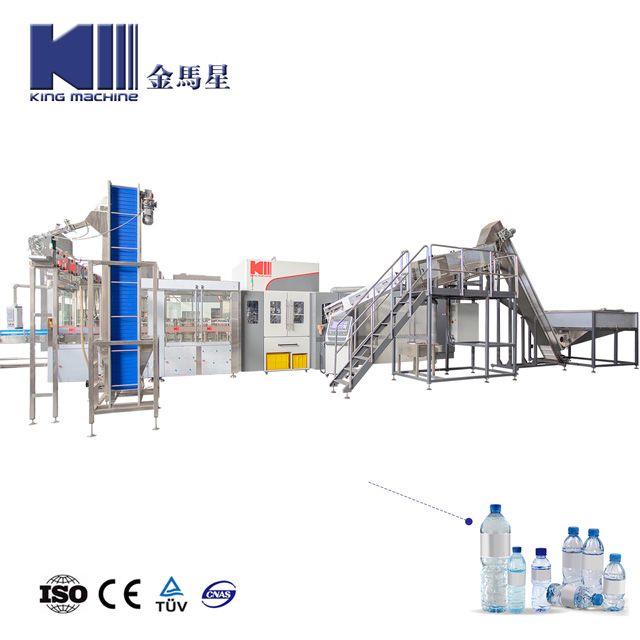
An automatic line connects the machines with conveyors and a unified control system. Personnel monitor the process and service the equipment but do not move the product manually.
The key difference is not speed but unit cost and quality consistency. On a semiautomatic line, fill volume, closure torque, and cleanliness depend on the individual operator and how far the shift has progressed.
Comparison of Key Parameters
| Parameter | Semiautomatic | Automatic Line |
|---|---|---|
| Capacity | up to 1 500 units/hr | from 2 000 to 40 000+ units/hr |
| Personnel per shift | 5-10 people | 3-5 people |
| Fill consistency | Depends on the operator | Controlled automatically |
| Contamination risk | Higher: open containers and manual contact | Lower: enclosed product path |
| Footprint | Compact | Requires sufficient line length |
| Startup time | Weeks | Months |
| Unit cost | Higher due to labor | Lower at high utilization |
| SKU flexibility | High | Determined by the set of change parts |
Where the Break-Even Point Lies
A practical guideline is that automation begins to provide a lower total cost of ownership when sustained demand exceeds approximately 2 000 units per hour and the line operates in two shifts. Labor costs make the largest contribution: on a semiautomatic line, they increase linearly with volume, while on an automatic line they remain almost constant.
The second factor is workforce availability. In many regions, the problem is not the cost of a shift but the inability to staff it. Automation addresses a staffing issue rather than an economic one in this case.
The third factor is the distribution channel's requirements. Nationwide retail chains impose packaging and quality consistency requirements that are difficult for a manual production area to meet.
How to Make the Decision
- 1
Calculate Annual Volume by Quarter
Account for seasonality rather than using only the peak month.
- 2
Convert Volume into Operating Hours
Divide by the actual available operating time using a utilization factor of 0.6-0.8.
- 3
Assess Workforce Availability
Determine how many people can realistically be hired and retained for shift work in your region.
- 4
Compare the 3-5-Year Cost of Ownership
Include capital costs, labor, energy, scrap, and maintenance—not just the equipment price.
- 5
Verify That the Layout Supports Growth
Even when starting with semiautomatic equipment, reserve space and utilities for a future automatic line.
FAQ
Can a semiautomatic production area later be expanded into a line?
Only partially. Individual semiautomatic machines usually cannot be integrated into an automatic line because of differing capacities and the absence of a communication system between components. Water treatment, compressed-air systems, and some infrastructure can be retained if they were initially sized with adequate reserve capacity.
How much does automation reduce rejects?
The main benefit is not the average reject rate but its consistency. Automation does not become fatigued toward the end of a shift, eliminating spikes in fill-volume and capping deviations that occur during the final hours of manual operation.
What should be selected for a broad product range and small batches?
A flexible semiautomatic or partially automated production area with fast changeovers. An automatic line with long format changeovers and frequent SKU changes may spend more time idle than operating.
Read next
Ready solutions
Equipment catalog
Project services
Related projects
Calculation on the topic
We will calculate your line
Describe the product, packaging formats and planned volume — we will prepare a line scheme, specification and preliminary budget estimate with payback.
- Line scheme and unit specification for your product
- Budget range and payback period
- Site requirements: power, water, personnel