

Wine filling line: price, composition and capacity
Wine is filled into glass with minimal oxygen contact: vacuum or level filling, neck inertization, cork or screw capping. Below are configurations from a small winery to industrial volume and budget structure.
- wine filling line price
- wine bottling equipment for sale
- wine filling line turnkey
- small winery filling line
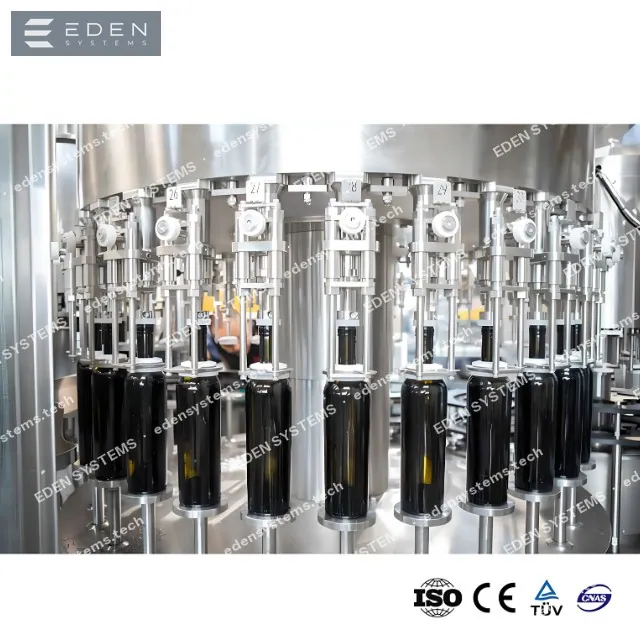
Wine filling configurations
Rinser, vacuum filler, natural cork capper, semi-automatic labeling
- Area
- from 150 m²
- Lead time
- 2-4 months
Rinse-fill-cap triblock, nitrogen inerting, heat-shrink capsule, 2-3 label labeling
- Area
- from 400 m²
- Lead time
- 4-6 months
Depalletizing, sterile filtration, triblock, muselet for sparkling, case packing, palletizer
- Area
- from 900 m²
- Lead time
- 6-9 months
What affects the cost of wine filling
| Budget item | What is included | What affects cost |
|---|---|---|
| Wine preparation | Filtration, cooling, buffer tanks | Wine type: still, sparkling, residual sugar |
| Filling | Vacuum or isobaric filler, inerting | Capacity and residual oxygen requirements |
| Capping | Cork, screw cap, muselet for sparkling | Number of closure types on one line |
| Decoration | Front, back, neck labels, heat-shrink capsule | Bottle decoration complexity |
| Packaging | Case packing, shrink wrap, palletizing | Shipment format and distributor requirements |
In wine, the budget is determined by oxygen, closure type and sterility. Still and sparkling wines require different fillers, so the calculation always starts from the product range.
How we calculate a wine filling section
- Step 1Separate still and sparkling
Sparkling requires isobaric filling and counter-pressure. We determine whether one universal line or two operating modes is needed.
- Step 2Calculate the oxygen regime
Bottle vacuuming, nitrogen inerting, dissolved oxygen control. This directly affects wine stability on the shelf.
- Step 3Select capping
Natural and agglomerated cork, screw cap, muselet. Each type is a separate capping unit and its own consumable cost.
- Step 4Plan sterility
Membrane filtration, bottle rinsing, line sanitation, routines between batches. Small volume does not remove cleanliness requirements.
- Step 5Assemble estimate and decoration
Filling, capping, capsule application, labeling with high positioning requirements, case packing, installation and launch.
Questions from winemakers about filling
Yes, sparkling wine is filled isobarically under counter-pressure and capped with muselet. Combining with still wine is possible but is a separate triblock configuration.
Yes, with level or volumetric filling. Consider accounting and excise marking requirements — we include these in the project from the start.
Oxygen control: bottle and headspace inertization directly affects shelf life and taste.
Detailed materials on the topic
Related clusters
Adjacent filling and packaging directions: line composition, budget and timelines differ — compare the options.
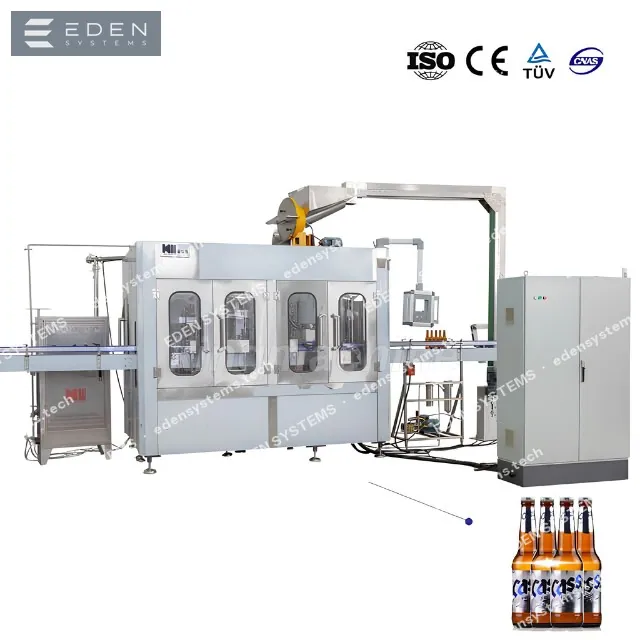
Сколько стоит линия розлива пива в стекло, банку и кег: изобарический розлив, пастеризация, этикетировка. Конфигурации от 1 000 до 12 000 единиц в час.
View calculation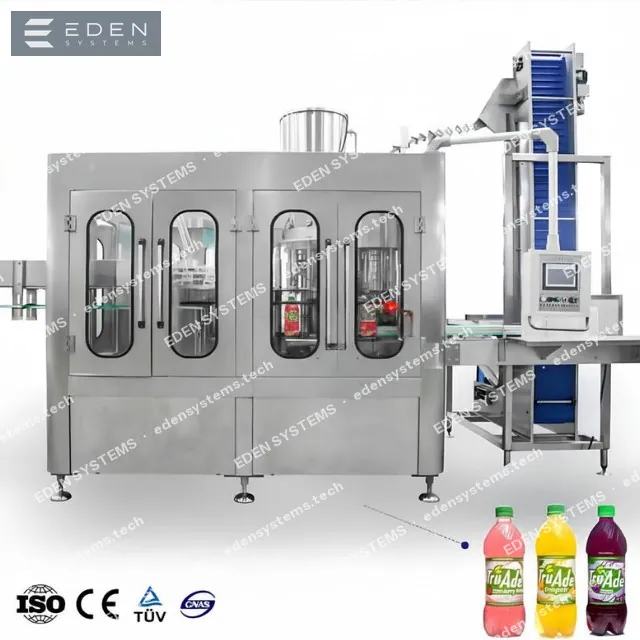
Сколько стоит линия розлива соков и нектаров: купаж, пастеризация, горячий розлив или асептика, розлив с мякотью. Конфигурации от 2 000 до 18 000 бут/ч.
View calculation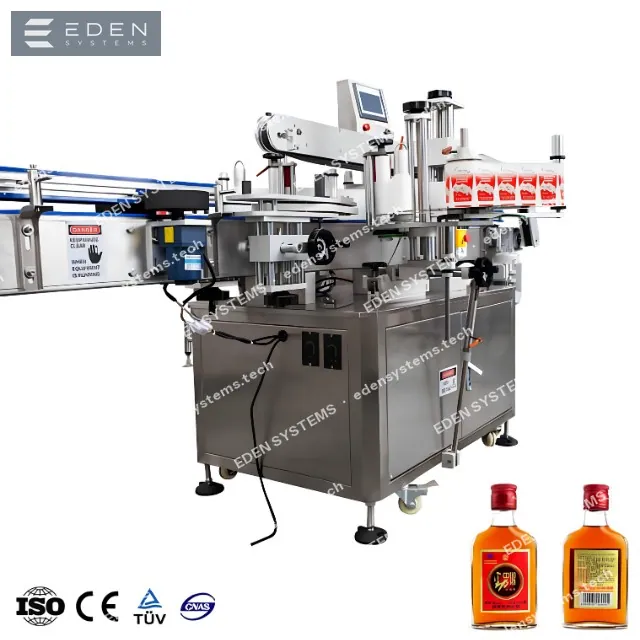
Сколько стоит этикетировочный автомат: самоклейка, клеевая кругоэтикетировка, термоусадочный рукав. Конфигурации от 3 000 до 18 000 бутылок в час и порядок подбора.
View calculation
Стоимость линии розлива подсолнечного, оливкового и технического масла: тип наполнителя, тара, укупорка и упаковка. Конфигурации от 1 000 до 9 000 бут/ч.
View calculationSelect a wine filling line
Specify production volume, shares of still and sparkling, closure types. We will provide a line scheme, section requirements and estimate.