

Household chemical filling line: price and equipment composition
For household chemicals, the line budget is determined by material chemical resistance, foaming and packaging variety. We show configurations for gels, detergents, antiseptics and aggressive liquids.
- household chemical filling line price
- detergent filling equipment cost
- liquid soap filling machine for sale
- antiseptic filling line turnkey
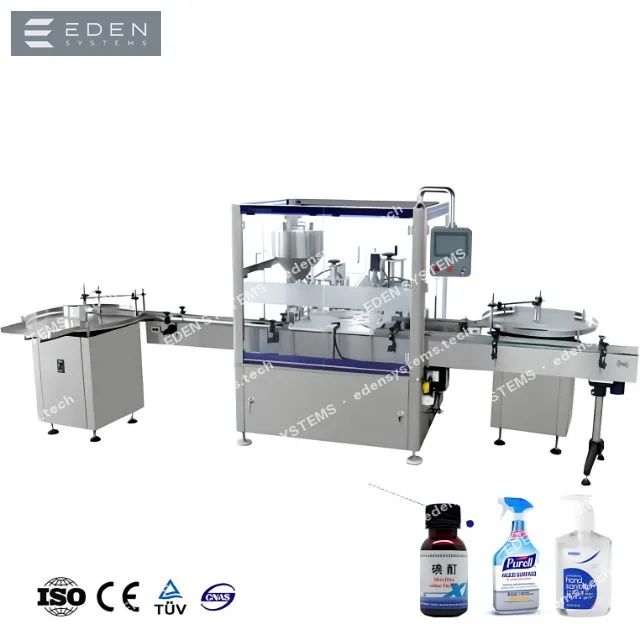
Household chemical line configurations
Linear piston filler, trigger or pump capper, self-adhesive labeling
- Area
- from 150 m²
- Lead time
- 2-4 months
Automatic filling with anti-foam diving, cap orienter, two-sided labeling, marking, case packing
- Area
- from 400 m²
- Lead time
- 4-6 months
Rotary filler in chemical-resistant execution, reactor department, automatic packaging and palletizing, batch tracking
- Area
- from 900 m²
- Lead time
- 6-9 months
What makes up a chemical line price
| Budget item | What is included | What affects cost |
|---|---|---|
| Chemical resistance | Contact materials, seals, pumps | Hypochlorite, acids, alkalis and solvents require special execution |
| Foam handling | Diving tubes, slow fill, deaeration | Surfactants in the recipe |
| Packaging variety | Bottles, canisters, drums, changeover kits | Number of formats and changeover frequency |
| Capping | Trigger, pump, push-pull, cap with torque control | Doser type and sealing requirements |
| Safety | Ventilation, bunds, drainage, PPE | Product hazard class |
Cost is determined by chemical compatibility and product foaming. Acids, chlorine and solvents require different materials, ventilation and safety solutions.
How we calculate a household chemicals filling section
- Step 1Check chemical compatibility
From safety data sheets we select stainless steel, polypropylene or fluoroplastic for contact parts, seals and pump membranes.
- Step 2Calculate foaming and viscosity
Gels, detergents and concentrates foam differently. We choose piston, gear or mass filler and a submerging-nozzle scheme.
- Step 3Plan product changeovers
We define product groups that can run on one line and the cleaning routine between them. We calculate product loss and transition time.
- Step 4Build in shop safety
Ventilation, bunds, explosion protection when working with solvents, drain piping. This is a mandatory part of the budget that is often forgotten.
- Step 5Form the estimate
Equipment, container feeding, capping with triggers and pumps, labeling, case packing, installation, commissioning and training.
Questions about chemical filling
Materials and protection. Contact parts are selected for the specific recipe, anti-foam solutions are added, ventilation and drainage are required, and electrical requirements differ.
Technically possible with chemical-resistant execution and full cleaning, but in practice a separate section is often allocated for hypochlorite and acids.
We calculate in liters per hour, not bottles per hour: on a 5 L canister the line speed in pieces drops but volume output rises.
Detailed materials on the topic
Related clusters
Adjacent filling and packaging directions: line composition, budget and timelines differ — compare the options.
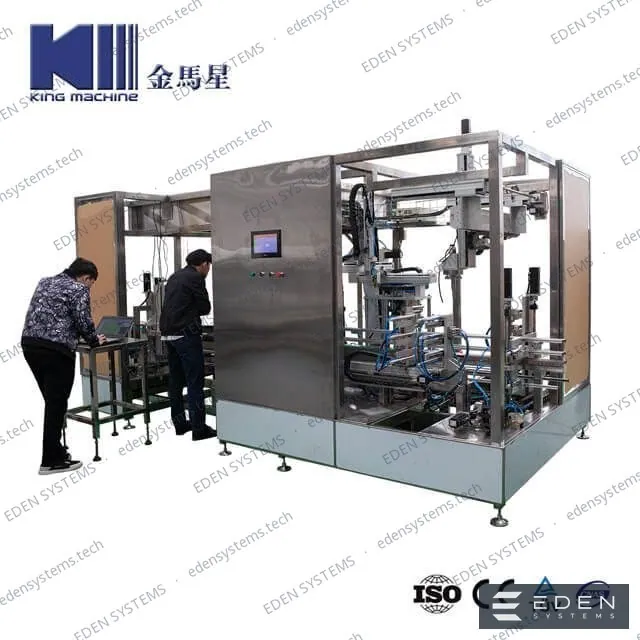
Сколько стоит линия розлива косметики: гомогенизатор, поршневой розлив, установка помпы, этикетировка, требования к чистоте. От 600 до 6 000 флаконов в час.
View calculation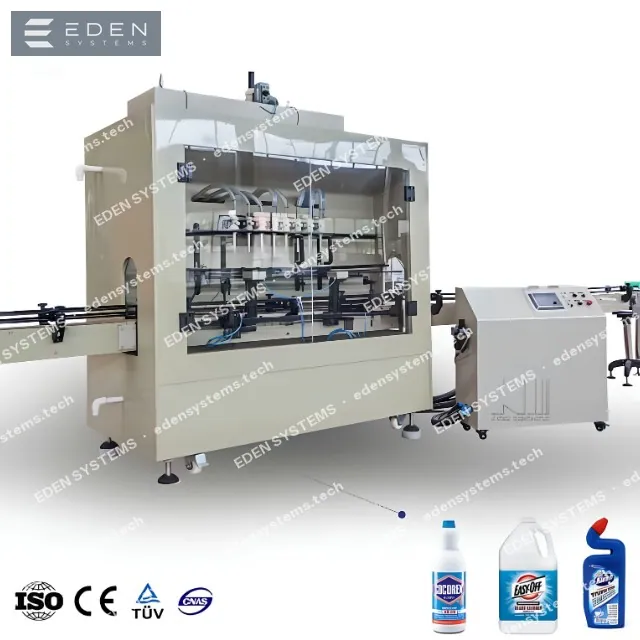
Стоимость линии розлива антифриза, тосола и стеклоомывателя: приготовление, весовой розлив, взрывозащита, укупорка. Конфигурации от 600 до 6 000 упаковок в час.
View calculation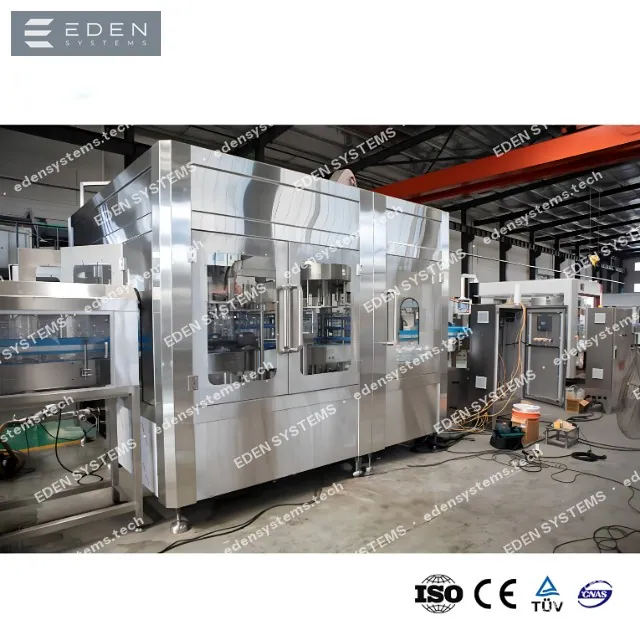
Стоимость линии розлива подсолнечного, оливкового и технического масла: тип наполнителя, тара, укупорка и упаковка. Конфигурации от 1 000 до 9 000 бут/ч.
View calculation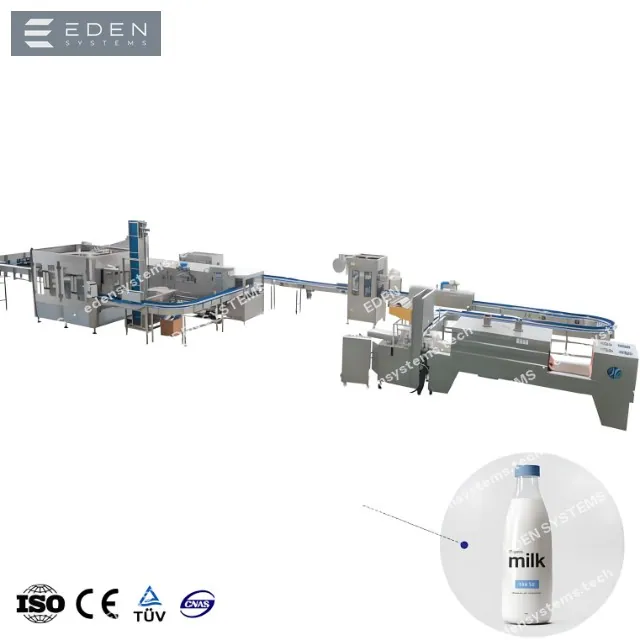
Стоимость линии розлива молока и молочных продуктов: пастеризация, ESL и асептика, ПЭТ, стакан и дойпак. Конфигурации от 1 000 до 12 000 упаковок в час.
View calculationCalculate a household chemical line
Send the product list with safety data sheets, container formats and volumes. We will prepare a scheme considering material compatibility and an estimate.