

Line Components and Technologies
CIP cleaning: how to size the station and not pay twice
A clean-in-place station does not produce product, so it is the most common place to cut costs. The bill comes half a year later: microbiology, manual disassembly of units and lost production hours.
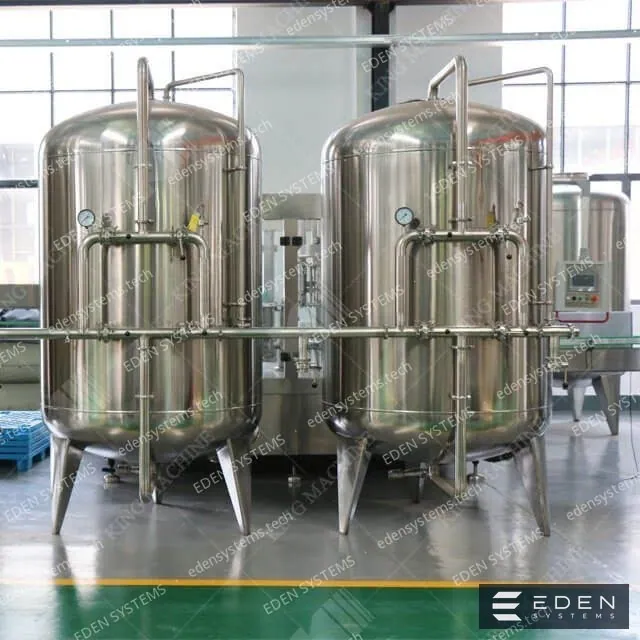
What CIP is in essence
CIP is the circulation of cleaning solutions through the same pipes and equipment that carry the product, without disassembly. Effectiveness is provided by the combination of four factors: temperature, concentration, flow velocity and time.
You cannot remove one factor without compensating with the others. Lower the temperature — increase time and concentration. That is why an underheated station may follow the routine but fail the rinse test.
Flow velocity in the pipe for reliable rinsing is taken at least 1.5-2 m/s. From this requirement the station pump is sized, not the other way around.
Standard cycle
- 1
Pre-rinse
Displacing product residues with water. The first portion is sent to recovery or drain.
- 2
Caustic wash
Caustic solution 1-2% at 70-80 °C. Removes protein and fat deposits.
- 3
Intermediate rinse
Rinsing caustic with clean water until neutral pH.
- 4
Acid wash
Nitric or phosphoric acid. Removes mineral deposits and scale.
- 5
Final rinse
Softened or purified water, conductivity control at the outlet.
- 6
Disinfection
Hot water, steam or chemical agent before filling starts.
Single-tank vs. multi-tank station
| Parameter | Single-tank | Three-tank |
|---|---|---|
| Cost | Lower | Higher |
| Water consumption | High | Lower due to solution recovery |
| Chemical consumption | High: solutions are dumped | Lower: solutions are reused |
| Cycle time | Longer | Shorter |
| Where applicable | One line, one shift | Several lines, shift work |
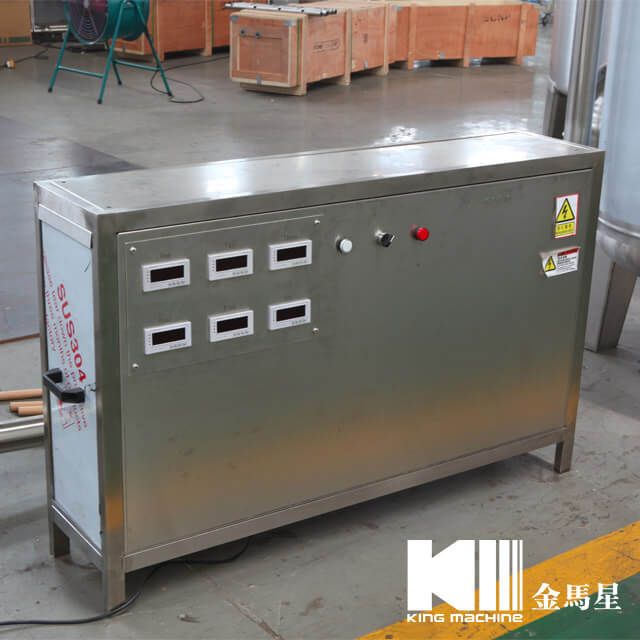
What to include in the project from the start
- Separate circuits
- Product circuit, filling circuit and tank circuit are washed by different programs.
- Return lines
- Without them the solution cannot be returned to the tank, and the multi-tank savings disappear.
- Validation
- Rinse sampling points and a log of results. Without validation the routine is just an assumption.
- Consumption accounting
- Water and chemical meters give the real cleaning cost per batch.
FAQ
How often is a full cleaning needed?
Standard practice is after every filling shift and mandatory when switching to another product. For sensitive products the interval is shortened to 8 hours of continuous operation.
How long does a cycle take?
A full cycle with all stages takes 60 to 120 minutes depending on circuit volume. This time is built into the production plan, otherwise the rated capacity will be overstated.
Can CIP be added to an existing line?
Yes, but it is more expensive: return lines must be cut in, part of the piping re-laid and production stopped. It is more rational to design the station into the original project.
Read next
Ready solutions
Equipment catalog
Project services
Related projects
Calculation on the topic
We will calculate your line
Describe the product, packaging formats and planned volume — we will prepare a line scheme, specification and preliminary budget estimate with payback.
- Line scheme and unit specification for your product
- Budget range and payback period
- Site requirements: power, water, personnel